

As we start a new year, it is our duty to remember what we can do to build a better world. For that, 2025 marks a pivotal year for Member States to put into action more ambitious action plans towards the Sustainable Development Goals (SDGs). Coinciding with the 10th anniversary of the adoption of the Paris Agreement and the SDGs, and with only 5 years left until the 2030 deadline, countries are falling short of achieving the Goals. This is evidenced by the 2024 Sustainable Development Report (SDR) developed by the United Nations Sustainable Development Solutions Network (SDSN), which shows that “On average, only 16% of the SDG targets are on track to be met globally by 2030, with the remaining 84% showing limited progress or a reversal progress.”
In addition, the current reality of our planet is far from hopeful. From escalating geopolitical tensions to the risks of Artificial Intelligence (AI) and the climate crisis - which is posed to be
the biggest challenge for humankind in history- our world is in urgent need of a bold action plan. This also becomes more clear after it has already been confirmed that 2024 broke the record to be the hottest year in history and the first to surpass 1.5 degrees Celsius above pre-industrial levels. As this alarming situation continues to raise serious concerns, we must assess what future we are building for our planet, the future of the present youth that will inherit the world, and, of course, for the future generations that are still to come. Against this background, we must ask ourselves: what is the most effective approach for the years ahead to ensure the successful advancement of a sustainable and prosperous world?
Why Localizing the SDGs Matter
Amongst the most important pathways that we can promote for the upcoming years, one that stands out is the localization of sustainability efforts. As it was reinforced during the last United Nations General Assembly (UNGA) with the adoption of the historic Pact of the Future: “We must meet the Sustainable Development Goals for all segments of society and leave no one behind, including through the localization of sustainable development.”
Localization of the SDGs is understood as the efforts to adapt the 17 Goals to the local context of each region, country, or territory by taking into account the realities of said place. This realities range from the socioeconomic context, the culture and values, the geography, or even the demographic of the territory, and it includes many other aspects that can have a direct correlation with the themes and priorities presented throughout the Goals and its targets.
This concept is not something new. In fact, for years now, the UN has been strongly emphasizing the importance of each Member State tailoring the Goals to their realities, and even the UN agencies and initiatives can attest to the benefits of promoting this localized approach to sustainable development. Most recently, in a UN Inter-agency policy brief titled “Inter-agency policy briefs on accelerating progress on the 2030 Agenda from local to global levels: The critical importance of SDG localization,” released in September 2024, the organization stressed this approach as the success to unlocking the full potential of the SDGs.
In the same document, we can find some of the benefits of localization, which include some of the following aspects:
- Increased Relevance and Influence: The main aspect of the concept of localization is an advantage in itself, as tailoring the SDGs to specific challenges and opportunities leads to a “customization” through policies and actions that are relevant for each respective place. By working at a smaller scale, policymakers can ensure that the influence of their actions is tangible and directly felt by citizens of each community, leading to an immediate influence and improvement of people’s lives.
- Facilitated Monitoring and Reporting: As the customization of the Goals becomes a reality through localization, monitoring and reporting of the progress also becomes easier to track. This is where initiatives such as the SDSN’s SDR or the Voluntary Local Reviews (VLR) stand out, as through the data they gather on the performance, countries can allow themselves to make more informed and data-driven decisions. Clear monitoring can also help identify the best practices to allow for scalability so they can be replicated for more widespread applications.
- Enhanced Collaboration: Localization can lead to greater collaboration as it doesn’t limit the sustainability actions to international organizations but welcomes further local, national, or even regional actors for collaboration. When local stakeholders are involved, there’s also a greater opportunity for citizens to take direct action and significantly contribute to advancing the SDGs.
Moreover, these benefits are also directly correlated to the concept of leaving no one behind. It is only by involving everybody, by undersanding their perspectives, ideas, and views, that we can identify innovative approaches and projects to implement and achieve the SDGs.
Leaving No One Behind: The Role of Youth in Localizing the SDGs
In relation to the principle of leaving no one behind and for the benefit of localizing sustainable efforts, we must ensure that everybody can contribute. This means that it is essential to uplift the voices of those who historically have been marginalized, whether those are Indigenous people, people with disabilities, members of the LGBTQ+ or, in the case of this blog, young people, who for far too long have been used as a token of inclusivity rather than as meaningful actors for the SDGs.
At this moment in time, youth is one of the most relevant demographic groups in the world, with almost half of the world population being 30 years or older. What's more, today's youth are some of the most educated generations in history and some of the most committed to changing the world for the better. Their hunger to positively impact the world is just a testament to the potential they have, and there's no doubt that they should be meaningfully engaged with sustainable efforts in order to achieve a prosperous world.
But why is there still some resistance to fully involving youth in the SDGs despite all of the opportunities? Regardless of their potential, their engagement has always been attached to several challenges that create a resource gap between them and the older generations. Although there are numerous, some of the most common challenges include the lack of trust and skepticism for their credibility and ability, the limited access to stakeholders and networks that allow them to learn and engage, and the lack of traditional forms of funding due to the high competition for limited resources.
However, regardless of this situation, we still need to advocate for youth inclusion in key decision-making processes and localization action plans. After all, as studies like The Commonwealth's Global Youth Development Report of 2022 have already confirmed, the lack of youth inclusivity is correlated with weaker implementation of the SDGs.
Building on this understanding, the SDSN actively recognizes the value of young people and localization, and as such, it supports programs that ensure this can be a reality for pursuing the SDGs.
Working worldwide to promote integrated approaches through education, research, policy analysis, and global cooperation, the SDSN coordinates 57 National and Regional Networks encompassing over 2,000 members of academia and research institutions. The objective of the Networks is simple: they focus on distinct projects and priorities by promoting high-quality education and research and by localizing and mobilizing support for the SDGs in their respective countries or regions. Ultimately, universities are in a privileged position to understand the local realities of a place and how by taking these into account, the SDGs can be tailored to work effectively in the local context.
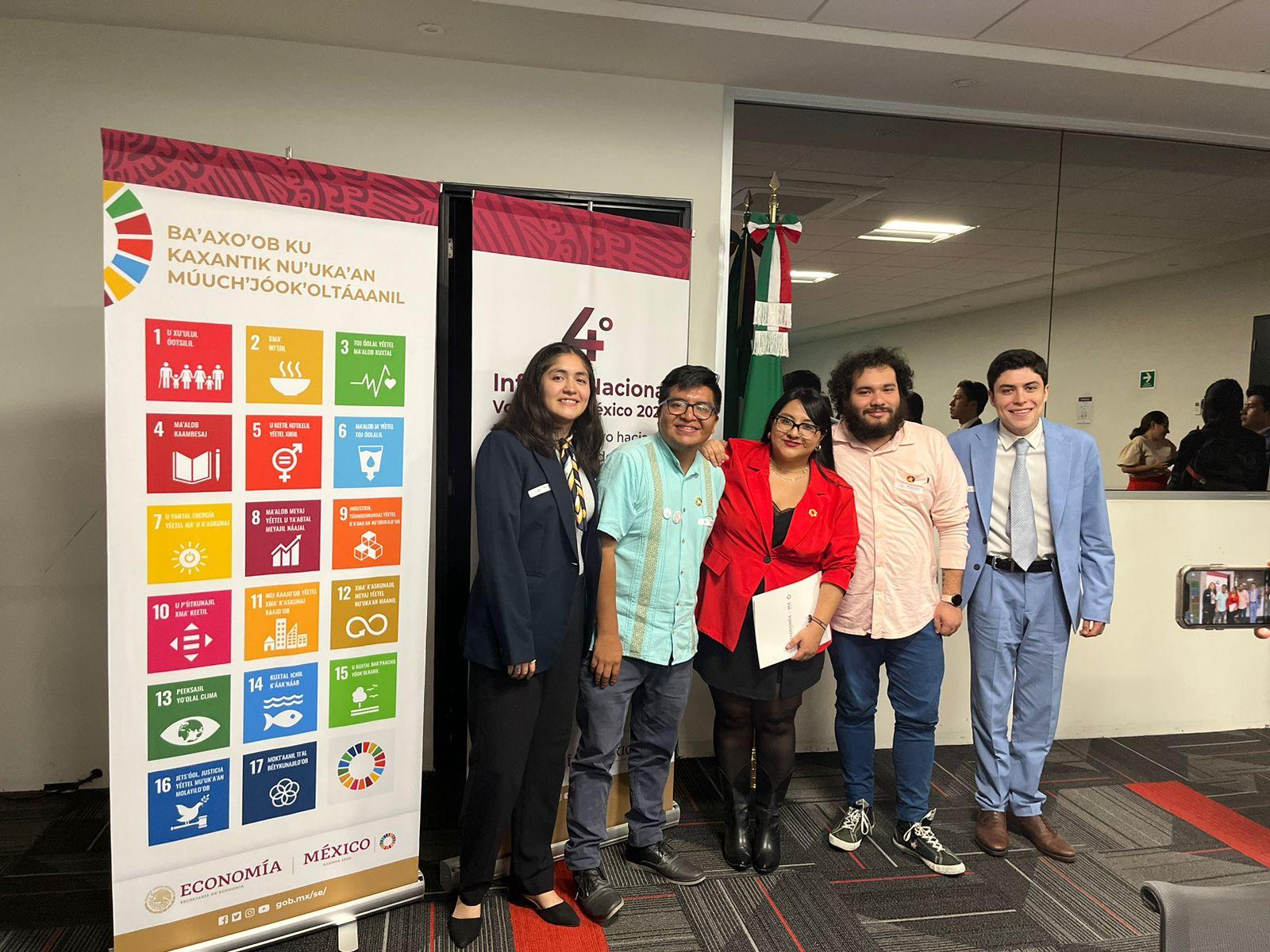
In addition, SDSN also supports the work of the Youth Networks, which is coordinated by the respective networks, and SDSN Youth –SDSN's flagship initiative for young people- and allows SDSN to promote the same aforementioned objective but with a sole focus on youth. With 14 active National and Regional Networks across 46 countries, these Youth Networks are in a unique place to leverage the potential of youth to achieve the SDGs in their communities. Activities such as participation in the Mexican VLRs by SDSN Youth Mexico or the organization of a Climate Literacy Program to achieve Target 4.7 by SDSN Youth Greece are perfect examples of how the localization of the SDGs by and for young people works.

Policy Recommendations for the Years Ahead
As this blog has presented, there are multiple benefits to localizing the SDGs, and the effectiveness of this approach can be significantly enhanced when involving youth. As we look ahead to the next 5 years and start to think about how the post-2030 world will look, it is becoming clear that while international cooperation is still essential, if we effectively want to achieve the SDGs, we need a bottom-up approach that meaningfully involves young people. This is, of course, an approach that starts from the local communities and gradually expands outward. For that, here are some recommendations on how to achieve this:
- Foster Inclusive and Accessible Participation: Institutions must ensure that young people from diverse backgrounds have equitable opportunities to engage in localization processes. This can be further facilitated by providing capacity-building opportunities that educate youth on how to participate meaningfully.
- Invest to Drive Innovative Projects: Providing or facilitating financial means for youth-led or youth-centered programs and initiatives can lead to new innovative ideas for improving localization. By equipping them with the necessary resources, communities can unlock transformative ideas that address local sustainability gaps.
- Promote Intergenerational Collaboration: Remembering that localization allows for enhanced collaboration among diverse stakeholders, policymakers must ensure that knowledge, experience, and innovative thinking bridge the gap between youth and older generations to create holistic, sustainable solutions that ensure long-term impact.
About the author
Raquel Armendariz Sucunza is a Program Associate, Networks & Youth at SDSN. As a communications and advocacy professional with international experience working for leading environmental educational and sustainability organizations, Raquel has demonstrated her ability to implement projects to drive positive change. She also has a bachelor's degree in international relations and a postgraduate diploma in public policy, and has served as the Communications Lead for the Global Schools Program, is also a trained and certified Climate Reality Leader, a former Girl Up community leader, a member of UNESCO's SDG4 Youth and Student Network.
Related
Banking on Biodiversity: The Seed Savers’ Crusade
Microlearning
 Podcast
Offered by:
Dr. Stefan Schmitz (Executive Director of the Crop Trust),
Good Practices and Resources on Sustainable Development Goals Monitoring
Resource
Training material
Offered by:
UNSD
Practical Guide to Data Storytelling in VNRs and SDG Reporting
Resource
Document
Offered by:
United Nations Statistics Division
UN DESA
Beyond Action: The Role of Inner Development Goals for a Sustainable Future
Microlearning
Podcast
Offered by:
Åsa Jarkskog (Director Global Collaboration, Inner Development Goals)