



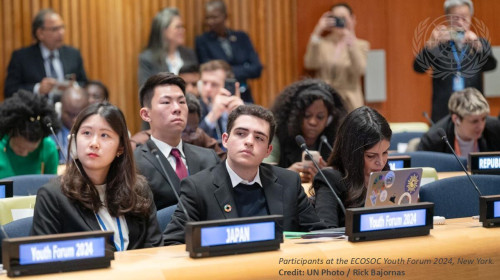
Youth at the Heart of Corporate Social Responsibility
Young people are not just beneficiaries of corporate social responsibility; they are key partners in shaping its future. Putting youth at the centre of CSR creates room for new ideas, strengthens accountability, and supports real progress toward the Sustainable Development Goals.
Introduction
As the world reaches the midpoint of the 2030 Agenda for Sustainable Development, questions of inclusion, equity, and resilience are more urgent than ever. Within this global debate, the role of youth stands out as indispensable. Achieving sustainable development requires societal wide collaboration, with youth involvement and empowerment being essential. Young people are potential agents of change who can drive sustainable development. The World Youth Report reveals how evidence-based youth policies can help accelerate youth-related objectives and engender sustainable development.
Besides, an article from the World Bank Accountability Mechanism highlights the role young people in holding decision-makers accountable for sustainable development commitments. The question remains whether youth are truly empowered to engage with issues affecting them and to drive responsible business practices. In our experience in research and advocacy, this empowerment is more rhetorical than real, with youth involvement slipping into tokenism rather than genuine influence.
This gap in practice is striking when set against the fact that more than 40 percent of the world’s population is under the age of 25, and with Gen Z and younger Millennials’ potential to shape markets, public discourse, and workplace expectations which is a clear reason businesses must place youth at the centre of their Corporate Social Responsibility (CSR) and sustainability strategies. Youth-centred CSR goes beyond moral imperatives; it offers far-reaching benefits for businesses, society and the environment. This is not an afterthought but a strategic necessity that strengthens reputation, drives innovation, and secures long-term relevance.
This influence is underscored by United Nations data, which shows that young people aged 10–24 now make up the largest youth cohort in history, with over 1.8 billion individuals, nearly 90% of whom live in developing countries. This demographic shift presents both a challenge and an opportunity for global development. The UN Department of Economic and Social Affairs (UN DESA) emphasises that youth participation is central to achieving inclusive, accountable, and sustainable societies by 2030. Beyond their numbers, young people are reshaping public discourse at an unprecedented scale, particularly through digital mobilisation. UN DESA notes that digital technologies empower youth to engage in policy consultations, co-create solutions, and amplify their voices in governance processes.
Against this backdrop, excluding youth from corporate strategies is increasingly seen not only as a missed opportunity but as a structural risk to business legitimacy. The UN Youth Office Strategic Plan 2025–2028 and the Youth2030 Strategy both highlight that underinvestment and exclusion of youth from decision-making processes undermine institutional credibility and limit progress toward transformative change.
The Business Case for Youth-Centred CSR
Engaging youth in CSR and other related initiatives such as social and green entrepreneurship is not just about doing the right thing. It also makes inclusive, equitable and sustainable business sense and can unlock the potential of youths as agents of change, creating vital economic and employment opportunities.
We have observed that young people bring unique skills, perspectives, and networks that can foster sustainable value creation. At the same time, their fresh ideas can unsettle established routines, raising questions about how far companies are ready to embrace change when it challenges existing ways of working. Nevertheless, they are digital natives, more connected than the rest of the world’s population and adept at using technology and social media to mobilise action and raise awareness of critical issues. Data from the International Telecommunication Union (ITU)
shows that 71 per cent of young people aged 15 to 24 were online in 2020. Similarly, research by Edelman indicates that 70 per cent of Generation Z are engaged in a social or political cause.
The importance of engaging youth in CSR is further underscored by 2024 Gen Z and Millennial survey which reveals that nearly all Gen Z and Millennials prioritise purpose-driven work and are willing to reject employers or assignments that conflict with their values, such as negative environmental impact, inequality, or lack of support for mental well-being and work/life balance.
The fresh perspectives and innovative ideas that youth bring to CSR can be helpful in addressing the complex challenges of the 21st century. Also, with the Generation Z demographic accounting for 17 per cent of global consumer spending, involving this key demographic in CSR efforts can considerably enhance a company's reach and relevance in the market. Youth engagement in CSR helps companies address issues and strengthens their market position in a competitive, socially conscious landscape.
By fostering a socially conscious environment, companies can attract and retain top talent who prioritise working for organisations with strong ethical values. Furthermore, CSR awareness and support among younger generations build brand loyalty and advocacy among young consumers, creating a supportive community around the brand. Ultimately, engaging youth in CSR initiatives also helps develop the skills and leadership potential of the future workforce.
Recent evidence strongly supports the business case for youth-centred corporate social responsibility. The Deloitte 2024 Global Gen Z and Millennial Survey reveals that over 86 percent of young people consider purpose central to job satisfaction. Nearly half of Gen Z (48 percent) and 43 percent of Millennials have rejected work assignments that conflict with their values, and 44 percent of Gen Z respondents have declined job offers for the same reason. This reflects a growing demand for ethical alignment in the workplace. Similarly, Accenture’s “Generation Purpose” report shows that nearly two-thirds of Gen Z are belief-driven buyers who make purchasing decisions based on a company’s social and environmental values. These insights demonstrate that youth-centred CSR is not only ethically sound but also strategically important, with direct implications for employee retention, consumer loyalty, and innovation capacity.
Principles of Youth-Centred CSR
Youth-centred CSR are initiatives that should be specifically designed to engage, empower, and benefit young people. These initiatives should be grounded in the principles of positive youth development, and focus on enhancing the skills, knowledge, and well-being of youth. This approach should be promoted by harnessing developmental psychology, social responsibility education, and social initiatives to create programs that address the immediate needs of young people while fostering their long-term growth and societal contribution. To realise these benefits, companies must embrace a genuine partnership approach to youth engagement. Taken together, these principles move beyond tokenism to show how businesses can institutionalise youth engagement in ways that are practical, measurable, and globally relevant.
Here are the guiding principles for youth-centred CSR
1. Involve youth in strategy and governance
Young people should have a seat at the table when it comes to setting CSR priorities, targets, and budgets. This can be achieved by conducting youth-centred materiality assessments, and appointing youth representatives to sustainability committees. The ultimate target should be to ensure that youth perspectives and expectations are incorporated into strategic decisions, not just short-term initiatives. In line with this, UNESCO emphasises that meaningful youth participation in governance requires formal structures and adequate resourcing to avoid tokenism. For example, institutions that succeed in this area typically establish clear mechanisms for influence and long-term support. Companies can apply these principles by creating youth advisory boards and integrating youth perspectives into sustainability KPIs and CSR reporting, as seen in initiatives like the UNCT Youth Advisory Board.
2. Co-create programmes with youth-led social enterprises
An OECD report demonstrates how youth-led social enterprises hold a double opportunity in addressing social and environmental issues while providing young people with opportunities in the labour market. Hence, other businesses can, for instance take a cue from the Ashoka network of ‘change marker’s initiative’ to develop programmes that resonate with youth realities. This could address a broad range of issues, from mental health, family issues and social justice to climate action and biodiversity conservation. In our view, CSR initiatives will have existential authenticity if it is co-designed with young social entrepreneurs. Without steady funding and institutional backing, however, co-creation risks pushing responsibility onto under-resourced youth rather than creating genuine long-term partnerships. This concern is echoed by the International Labour Organisation which emphasises that youth-led enterprises are key to reducing unemployment and driving sustainable growth, but only when supported by enabling ecosystems. Access to finance, mentorship, and policy support are essential for success. Partnering with these enterprises allows companies to scale innovation while empowering youth leadership.
3. Partnership for skills development and opportunity creation
Despite the potential of young people to drive sustainable futures, they often lack access to policy and decision making spaces and power. Drawing insight from existing projects, such as Siemens’ and the University of East London’s “Living Lab’s” partnership for sustainability, businesses can help bridge this skills gap by partnering with educational institutions and governments to promote experiential technical training to enhance employment opportunities in the green economy.
Expanding on this urgency, the World Economic Forum’s Future of Jobs Report (2023) reveals that six in ten workers will require training before 2027, with green and digital skills among the most in demand. For young people entering the workforce, this challenge is even greater: UNICEF (2022) estimates that nearly three-quarters of youth are off-track in acquiring the skills needed for employment. As climate action reshapes workforce demands, employers increasingly seek green and digital competencies. Yet, young people struggle to access these opportunities, making targeted youth skills development essential for a sustainable and inclusive future. By aligning CSR with youth-focused skills-building programmes, companies not only prepare the next generation for future labour markets but also secure the talent pipelines needed for their own digital and sustainability transitions. From what we have seen, the real difficulty is whether firms, under pressure for short-term results, are willing to sustain these longer-term investments in skills and human capital.
4. Amplify youth’s voices and networks
Integrating youth perspectives into CSR promotes a more inclusive decision-making process and greater accountability in sustainability drives. One of the important tools for enhancing youth’s participation in social issues are digital tools as they provide accessible channels for communication and advocacy. Similar to UNICEF’s digital civic engagement approach companies can elevate young people’s perspectives and networks by leveraging these platforms to foster interactive spaces for youth engagement in civic activities and advocacy. Also, introducing youth-led initiatives and community projects can empower young people to deal directly on matters they hold dear, cultivating a sense of ownership and accountability. Besides, creating formal corporate structures where young employees and stakeholders provide inputs and feedback on CSR initiatives can both empower youth and ensure corporate strategies are aligned with their values and expectations.
Relying too heavily on digital tools can, however, leave out young people with limited access to reliable internet, a challenge that is particularly visible in many parts of the Global South. Even so, there are promising examples of inclusive digital engagement. In this context, UNICEF’s U-Report demonstrates the power of technology in amplifying youth voices in policy and programme design, engaging millions of young people across more than 90 countries. Businesses can replicate this model by using internal feedback platforms, hackathons, and digital advisory councils to integrate youth perspectives into decision-making.
5. Evaluate and communicate youth-centred CSR impact
This can be achieved through a blend of qualitative and quantitative metrics. Quantitative metrics include tracking the number of youths involved in CSR governance, the percentage of youth who subsequently attain leadership positions in sustainability, and the tangible outcomes of youth-centred CSR. Qualitative metrics involve evaluating the personal growth and skill development of youth participants, and their improved awareness and commitment to sustainability.
Building on these evaluation approaches, the Global Reporting Initiative recommends that CSR disclosures include detailed and comparable data on stakeholder engagement to ensure transparency and accountability. While youth-specific disaggregation is not mandated, reporting frameworks increasingly encourage demographic breakdowns to reflect inclusivity and impact. Clear reporting strengthens corporate credibility and builds trust with youth stakeholders and wider society
Conclusion
Young people bring fresh perspectives, and innovative ideas that can shape the future of both business and society. Their innovative mindset makes them indispensable assets in today’s fast-paced business environment. Amidst growing sustainability challenges, organisations risk falling behind if they fail to engage young people effectively. As salient stakeholders, youth bring transformative energy that can revitalise traditional approaches and enhance long-term business success. If their voices are sidelined, the result could be wider intergenerational divides and growing scepticism about the credibility of CSR.
In our work with students and organisations, we see daily how young people contribute creativity, passion, and digital savvy to solving pressing challenges. This lived experience reinforces our perspective that businesses serious about corporate social responsibility must build strategies around youth inclusion. By involving young people in CSR governance, co-creating programmes with them, equipping them as change agents, amplifying their voices, and measuring their impact, companies can deliver significant benefits for their bottom line, society and the planet.
Youth-centred CSR is not optional; it is essential for building a sustainable future. As the leaders of tomorrow, young people have the creativity, passion and digital savvy to tackle our most pressing challenges. Companies that harness this potential will be better placed to navigate disruption, build resilience and deliver on their purpose. The time to act is now: empowering youth as partners in CSR is an investment in a more sustainable and inclusive future for all.
A 2024 Forbes Business Council article reinforces the imperative for CSR to evolve from voluntary philanthropy into a strategic business necessity. It argues that CSR drives innovation, strengthens brand loyalty, and enhances employee satisfaction. Positioning youth as co-creators of sustainable futures aligns with this shift. Companies that fail to integrate youth meaningfully into their CSR strategies risk reputational, operational, and talent-related consequences. The true test of corporate responsibility in the coming decade will be whether today’s leaders move beyond rhetoric and empower youth as equal partners in shaping a sustainable, inclusive, and resilient future. In doing so, businesses not only future-proof their operations but also contribute directly to achieving the Sustainable Development Goals by 2030 and beyond.
Related

Transforming Economies for Sustainable Development
Course
Facilitated e-learning
5 Aug 2023
Offered by:
UNSSC

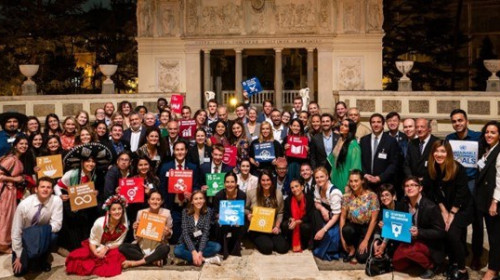
Equipping Youth with Skills & Agency to Shape Policies for a Sustainable Future
Microlearning
 Blog
Blog
Offered by:
Kayla Colyard (Education Manager, SDG Academy - UN Sustainable Development Solutions Network (SDSN)), Patrick Paul Walsh (Director, SDG Academy - UN Sustainable Development Solutions Network (SDSN))

How can we a positive future with Artificial Intelligence?
Microlearning
Podcast
Offered by:
Jeanne Lim, CEO (being AI)