


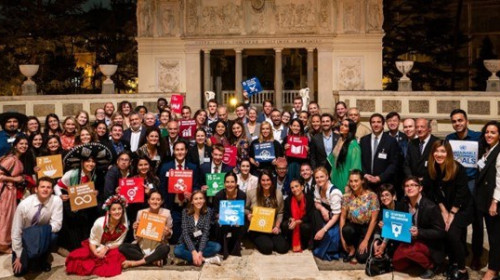
In a world grappling with fast-paced environmental, social, economic and institutional changes, young people’s agency in shaping the future is more vital than ever. Realizing a hopeful future depends on humanity achieving sustainability, peace, and universal access to healthcare, education, and gainful employment. By providing youth with quality education and hands-on training, we enable them to make meaningful contributions to their communities and beyond. Yet, education alone isn't enough—young people deserve not just a seat but an active role in decision-making spaces that influence their future. When youth are engaged in creating, implementing, and reviewing policies, we open the door to a more sustainable, inclusive future shaped by their valuable insights and aspirations. Older generations need to facilitate and support such an engagement in all walks of life.
Over the past couple of years, there has been a greater emphasis on the importance of youth inclusion in UN events. Two important events were held during the UN General Assembly, the Transforming Education Summit (2022) and the Summit of the Future (2024).
The Transforming Education Summit (2022) highlighted several key takeaways focused on empowering youth to drive transformative change in education:
- Youth Empowerment and Leadership: Youth voices were central, emphasizing the need for young people to be active participants in shaping educational policies and systems. The summit called for meaningful youth involvement at all levels of decision-making.
- Inclusive and Equitable Education: A priority was placed on creating education systems that address disparities, particularly for marginalized groups, to ensure that all youth have access to quality, inclusive education.
- Skills for the Future: The summit highlighted the importance of equipping youth with skills aligned with the future of work, including digital literacy, critical thinking, and sustainable development competencies to prepare them for an evolving job market.
- Youth as Catalysts for SDGs: Recognizing the vital role of education in achieving the Sustainable Development Goals (SDGs), the summit encouraged youth-led initiatives that support sustainable development, peace, and environmental stewardship.
- Financial Commitments and Accountability: Calls were made for increased investment in education and mechanisms to hold governments accountable for promises made toward educational reforms, ensuring resources are directed to support youth-centered education reforms.
The summit concluded with a global call to action, urging stakeholders to collaborate in making educational systems more resilient, inclusive, and responsive to the needs of young people.
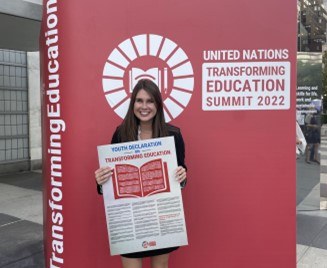
Click here to read and download the Youth Declaration on Transforming Education
The Summit of the Future (2024) discussed pivotal initiatives for empowering youth in global policy-making, emphasizing the long-term impacts of today’s decisions on future generations. Key aspects relevant to young people from the summit are:
- Institutionalized Youth Participation: Through the Pact for the Future, the summit committed to embedding youth involvement in national and international governance structures. This framework aims to ensure that young voices are not merely symbolic but central in shaping policies, particularly those with long-term effects like climate action and economic equity. This shift is seen as essential to empower youth as decision-makers rather than as observers, paving the way for systemic inclusion of youth perspectives.
- Declaration on Future Generations: This declaration emphasizes intergenerational justice, aiming to protect the rights and well-being of those yet to come. It urges governments to address issues like poverty and climate change with a forward-thinking mindset, where today's policies protect future generations. Notably, the declaration advocates for social, economic, and environmental policies that will sustain young people’s futures and foster equitable development across generations.
- New Metrics Beyond GDP: The summit also tackled economic metrics, proposing a new framework that measures well-being beyond GDP. This framework acknowledges that traditional economic growth indicators often fail to capture environmental harm or social progress, both critical to youth well-being. A focus on comprehensive well-being data, including age- and gender-specific metrics, was highlighted as a way to monitor and address youth-specific challenges effectively.
- Environmental and Climate Action: Youth involvement in climate policy was a central theme, with commitments to support young leaders in climate resilience initiatives, particularly in the Global South. The summit reaffirmed the 1.5°C temperature limit target, supporting a shift away from fossil fuels and promoting equitable climate finance. Youth engagement in these efforts is seen as vital to creating solutions that align with the needs of younger generations and future resilience goals.
- Enhanced Funding and Accountability: The summit called for sustainable, transparent funding for youth programs and youth-led organizations, stressing the need for secure resources to support young people's long-term participation. As we know, without consistent funding, many youth initiatives cannot effectively operate, so the summit advocated for dedicated financial support for youth participation across levels of governance.
These themes reiterate the summit's shift toward a more inclusive, future-focused multilateral approach that recognizes young people as critical stakeholders in building a sustainable and equitable world. The Pact for the Future and the Declaration on Future Generations reflect a growing commitment to intergenerational justice and actionable youth inclusion.
One of the main themes of the Pact for the Future - Youth and Future Generations - highlights the following, “The world needs a global standard for meaningful youth engagement set at both national and global levels. National youth consultative bodies need help to raise their voices. Young people need more funding to promote participation, and a global community should consider changes to legislative and policy frameworks”.
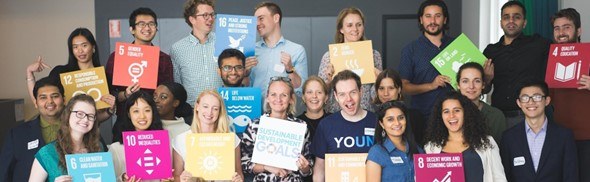
So, how do we make meaningful youth engagement a reality?
To truly support young people and help them reach their potential, governments, public organizations, and international institutions must listen more closely to youth priorities and actively address their needs. Young people deserve an environment that not only safeguards their rights but also fuels their growth through dedicated investments in quality education and lifelong learning opportunities.
The well-being of a society depends on its human capital, as access to quality education, healthcare, and lifelong learning drives progress in reducing poverty, fostering inclusion, and building environmental resilience. However, failing to invest in these resources for young people deeply undermines sustainable development and our collective future.In recognizing such, the UN Sustainable Development Solution Network's (SDSN) Recommendations for the Summit of the Future, included the following statements,
“We therefore call on the Summit of the Future to prioritize the access of every child on the planet to the core investments in their human capital, and to create new modalities of global long-term financing to ensure that the human right of every child to quality primary and secondary education, nutrition, and healthcare is fulfilled no later than 2030. We recognize the crucial need for gender equality (SDG 5) to ensure that girls as well as boys are enabled and encouraged to reach their full potential.” (Chapter 4)
“The financing gap to achieve universal access to human capital is on the order of $200 billion per year for education and $200 billion per year for healthcare and nutrition, and therefore less than one-half of 1% of world output. These sums are entirely manageable. The multilateral development banks in particular should immediately step forward with greatly increased long-term low-interest financing for human capital investments at the scale required and called for by the Sustainable Development Goals, and notably SDG target 3.8 (universal health coverage) and SDG target 4.1 (universal completion of schooling at least through upper-secondary).” (Chapter 4).
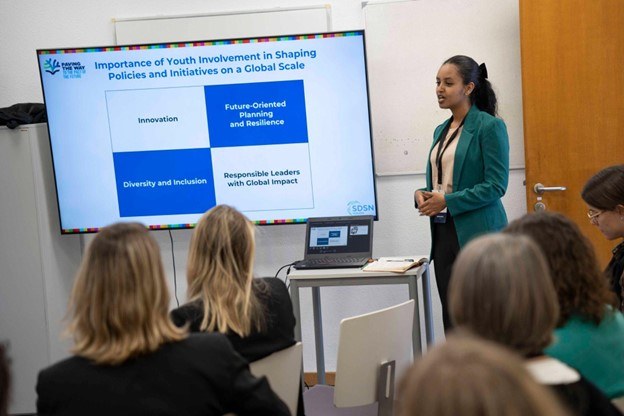
SDSN understands that young people have a vital role in shaping a world rooted in sustainability and achieving the 2030 Agenda. As digital and global citizens, they bring fresh perspectives and skills that are essential for tackling today’s most pressing challenges. Yet, the policies we create now will shape their future. Without a thoughtful and inclusive approach to sustainability, the decisions we make could lead to irreversible consequences. Ensuring that youth have access to quality education, practical training, and a voice in policy decisions is key.
“For this reason, the voices of youth are essential. The empowerment of youth, by training, education, mentorship, and participation in public deliberations, can foster a new generation that is committed to sustainable development, peace, and global cooperation. A new UN Council of Youth and Future Generations can strengthen the UN’s activities in training and empowering young people, and can provide a vital global voice of youth to today’s complex challenges. We therefore call on the Summit of the Future to support the establishment of a new UN Council of Youth and Future Generations as a UN General Assembly subsidiary body under Article XXII. We also call on the existing UN organs – ECOSOC, the UN Security Council, the Human Rights Council, and others – to actively promote the voices of young people in their sessions, proceedings, and practices.” (Chapter 4.2).
To secure a peaceful, sustainable future, the world needs a surge in increased investment, innovation, and capacity development to ensure that every child, including those in the poorest regions, has access to quality education. This goal requires stronger international collaboration and a transformation of our multilateral systems, which were not built to address today’s complex global challenges. Chapter 4 of the Pact for the Future emphasizes the need for intergenerational responsibility, calling for both immediate action and long-term planning to meet current needs while preserving opportunities for future generations through a global overhaul of education.
As Jeffrey Sachs highlighted at the 2022 Transforming Education Summit, investing in global education is not only a moral duty but a pathway to achieving global peace and comprehensive sustainable development. Universal access to quality education, ensuring proficiency in reading, writing, and STEM, is essential, with the SDG 4 targets providing a clear framework for these goals.
Furthermore, intergenerational dialogue is key to ensuring that future generations’ needs are not overlooked. By embedding their welfare into every policy dimension of sustainable development—economic, social, and environmental—at all levels of governance, we create a more inclusive and lasting impact. Policies focused on the long-term future are fundamental to achieving true sustainability. Now more than ever, people of all generations must come together to champion this vision and shape a world where sustainable development becomes a legacy, not just a goal.
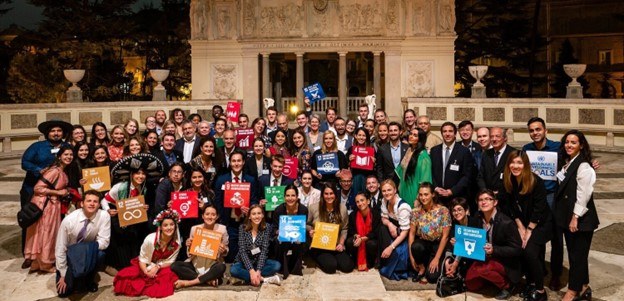
Paragraph 53 of the Transforming our World the 2030 Agenda for Sustainable Development states, “The future of humanity and of our planet lies in our hands. It lies also in the hands of today’s younger generation who will pass the torch to future generations. We have mapped the road to sustainable development; it will be for all of us to ensure that the journey is successful and its gains irreversible”.
The empowerment of youth, by training, education, mentorship, and participation in public deliberations, can foster a new generation that is committed to sustainable development, peace, and global cooperation. In this blog we argue for the reform of institutions at all levels of governance that empower intergenerational dialogues that puts the focus on longer term outcomes in policy dialogue, planning and implementation taking on the Brundtland Report in 1987 that defined sustainable development as "development that meets the needs of the present generation without compromising the ability of future generations to meet their own needs".
In this blog, we advocate for reforming institutions at all levels of governance to foster intergenerational dialogues that prioritize long-term outcomes in policy-making, planning, and implementation. Drawing inspiration from the 1987 Brundtland Report—which defined sustainable development as “development that meets the needs of the present generation without compromising the ability of future generations to meet their own needs”—we emphasize the importance of a forward-looking approach that serves both current and future generations. All current generations need to work together to strengthen education, training and the inclusion of young people so that a new generation committed to sustainable development, peace, and global cooperation can foster.
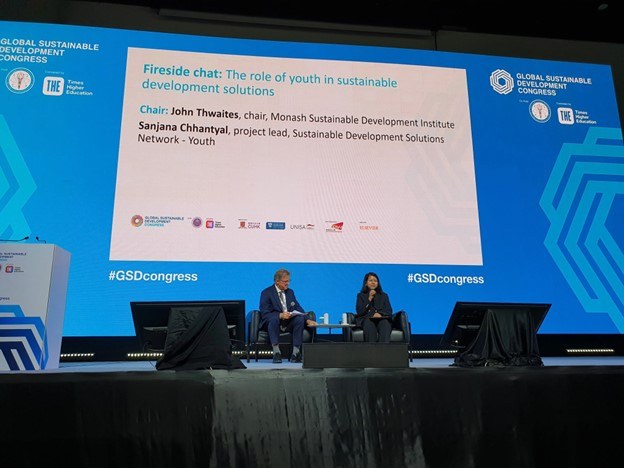
About the authors
Kayla Colyard: Education Manager, SDG Academy - UN Sustainable Development Solutions Network (SDSN)
As an Education Manager at the SDG Academy, Kayla is actively engaged in crafting educational content aimed at fostering an understanding of sustainable development. Her responsibilities encompass not only the development of impactful learning materials but also providing expert pedagogical support to ensure the seamless integration of our content into educational and professional development settings. Additionally, she plays a key role in fostering international partnerships, collaborating to spearhead the creation of materials centered around the SDGs. Prior to her current role, Kayla served as the Events & Partnerships Lead and UN Focal Point for SDSN Youth.Based in NYC at the SDSN's Secretariat Office, Kayla holds dual Masters Degrees in International Development and an MBA, both from the University of Mount Saint Vincent.
Patrick Paul Walsh: Director, SDG Academy - UN Sustainable Development Solutions Network (SDSN)
Patrick Paul Walsh is the Vice President of Education and Director of the SDG Academy at the UN Sustainable Development Solutions Network (SDSN). He is on secondment from University College Dublin where he remains a Full Professor of International Development Studies, Director of the UCD M.Sc. in Sustainable Development in partnership with the SDG Academy and President of the Statistical and Social Inquiry Society (SSISI) of Ireland. He received a Ph.D. in Economics from the London School of Economics and Political Science. He is a Government of Ireland Fellow, Marie Curie (Brussels) Fellow, IZA (Bonn) Fellow, RSA (London) Fellow, EIIR (Brussels) Fellow and REPOA (Tanzania) fellow. He has held academic positions in Trinity College Dublin, K.U. Leuven, Harvard University and Columbia University. He has also held positions in the United Nations, European Commission, IMF and World Bank. His current focus is on Sustainable Development Education than is informed by Science, Practice and Policy.
Information on SDSN Youth
Providing education, and training across the globe
Launched in 2015, SDSN Youth is one of the world’s largest networks of young leaders dedicated to shaping a sustainable world for future generations. SDSN Youth is run by a network of volunteers from hundreds of countries who work to accelerate innovative youth solutions towards the SDGs by connecting young people to pathways of understanding and action for the SDGs and the Paris Agreement. Each Regional/National Youth Network is embedded into its corresponding SDSN National or Regional Network, focusing on mobilizing young people towards achieving the SDGs.
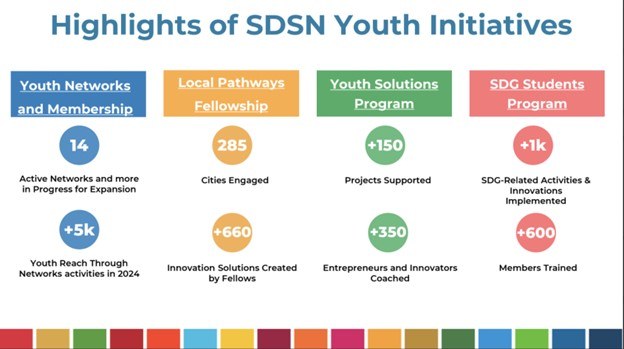
SDSN Youth is dedicated to empowering young people to drive sustainable change globally. Through various programs, they provide training, mentorship, and resources to youth, positioning them as leaders in sustainable development. Key initiatives include the SDG Students Program, which supports student hubs to engage in the Sustainable Development Goals (SDGs) and tackle local issues, and the Youth Solutions Program, which offers young innovators access to expert guidance and resources to advance SDG-focused projects. SDSN Youth also runs the Local Pathways Fellowship, a 10-month program where participants analyze their local contexts to develop impactful urban projects. Its flagship event, the Vatican Youth Symposium, brings together young leaders and experts in various fields, from various backgrounds and disciplines, from all parts of the world for a 2 day symposium to share and ideate on innovations.
There are several ways to get involved with SDSN Youth:
- Join the Network to gain hands-on experience and be part of a global youth movement.
- Attend Events such as workshops, seminars, and conferences for networking and skill-building.
- Share Ideas by contributing to open calls for innovative sustainability solutions.
SDSN Youth values inclusivity, collaboration, and innovation, creating a supportive environment for young leaders dedicated to long-term, positive change in sustainability.
Interested in joining or supporting SDSN Youth?
Get in touch: youth@unsdsn.org
Learn more here: www.sdsnyouth.org/
Related
Teach the Future’s NGFP-YV Awards: Youth Foresight in Action
Microlearning
 Blog
Blog
Offered by:
Ms. Lisa Giuliani (Executive Director of Youth Foresight Projects, Teach the Future), Ms. Lourdes Rodriguez (Executive Director Hubs Network, Teach the Future), Ms. Amna Habiba (Director of Technology and Young Voices Network, Teach the Future)
Can Education Wait? A Deep Dive into Learning in Crisis Zones
Microlearning
Podcast
Offered by:
Yasmine Sherif, Executive Director (Education Cannot Wait)

Tomorrow's Classroom: Digital Transformation through Systems Thinking
Microlearning
Podcast
Offered by:
Breanne Pitt, Research Fellow (World Economic Forum)
Science, Technology, and Innovation (STI) Forum of the United Nations
Microlearning
Podcast
Offered by:
Mr. Sergiy Kyslytsya, the Ambassador and Permanent Representative of Ukraine to the United Nations (United Nations), Mr. Kennedy Godfrey Gastorn, the Ambassador and Permanent Representative of Tanzania to the United Nations (United Nations)