
This blog post provides a summary of the discussion and includes the recording, an overview of questions and answers from the discussion, as well as the resources shared during the session.
The session brought out a number of important themes. Three stand out to me:
- Measuring change or evaluating change: the latter requires criteria for what good and bad change looks like. Rubrics can be a useful tool and they can function as conversation starters for change agents about what is going on, what role they are playing and what they should do next
- We need to measure what matters rather than what is easy to measure. This requires broadening what data we rely on, and how we collect, analyze and present it.
- Critically reflect on who defines what ‘good’ looks like. Inclusion and participation of the people we are trying to help is essential.
Offered by
Related
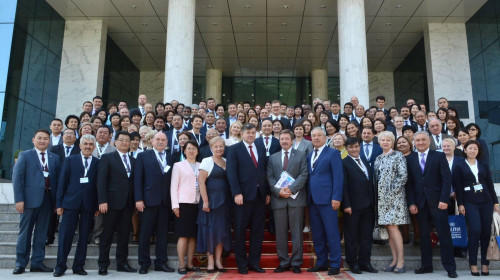
Empowering SDG progress: A Glimpse into the Kyrgyz Republic's SDG Monitoring
Microlearning
 Blog
Blog
Offered by:
Nazira Kerimalieva (First Deputy Chairman, National Statistical Committee (NSC) of the Kyrgyz Republic)
Policy cycle, integrated approaches and SDGs for African LDCs
Resource
Interactive learning package
Offered by:
UNITAR

Policy cycle, integrated approaches and SDGs
Resource
Interactive learning package
Offered by:
UNITAR

Transforming Economies for Sustainable Development
Course
Facilitated e-learning
5 Aug 2023
Offered by:
UNSSC

The 2030 Agenda and the emerging bioeconomy
Microlearning
Blog
Offered by:
Daniel Vicente Ortega Pacheco
UNSSC