
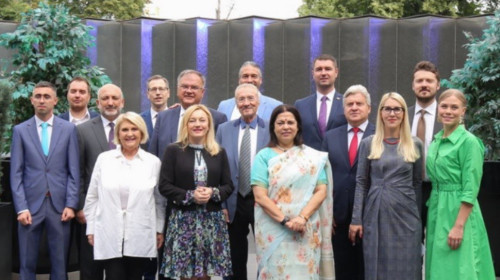
The Executive Diploma Programme in Cultural Diplomacy, International Relations, & Global Governance by UNITAR and ICD is comprised of specialized courses designed to provide participants with a substantial knowledge of Cultural Diplomacy as practiced by global governance institutions and international organizations around the world. A particular emphasis of the program is Cultural Diplomacy's role in global governance to improve the ways in which the diversity of cultures can properly understand each other and to facilitate cooperation more effectively at the political, economic and cultural levels. The program provides a thorough background in Cultural Diplomacy, using a historical and case study approach, while further accentuating the role and potential of Cultural Diplomacy in strengthening Global Governance, specializes in Global Governance Institutions, more specifically the UN, the EU, and the African Union. The eight modules will be held over the course of three months, and the final certificate will be awarded upon submission of a final paper.
The format of the programme is hybrid with the possibility to participate in an in-person 10 days in Berlin or completing all courses online.
The training will be delivered in English.
Target Audience
- Professionals working in the international field, government and state official representatives;
- Professionals working on an international level interested in expanding their knowledge of global governance and cultural diplomacy;
- Personnel from non-governmental organizations, diplomats, and government officials interested in developing their knowledge of global governance and cultural diplomacy;
- Students and early-career professionals interested in global affairs, cultural diplomacy, mediation, and international organizations as well as other related areas such as policy development, diplomacy, security, economics, and climate change.
Learning Objectives
By the end of the programme, participants should be able to:
- Gain a comprehensive overview of cultural diplomacy, including its theory, history, evolution, and future trends in a changing world.
- Analyse interdisciplinary agents of cultural diplomacy and connect them to geographic, historical, and foreign policy contexts.
- Develop a broad understanding of Global Governance concepts, methods, and agendas.
- Identify key concepts and functions of UN bodies and Human Rights Institutions in international governance.
- Develop effective crisis management and communication skills.
- Understand the purpose of the Sustainable Development Goals (SDGs) within the UN 2030 Agenda and their role in addressing global challenges and promoting sustainable development.
Related
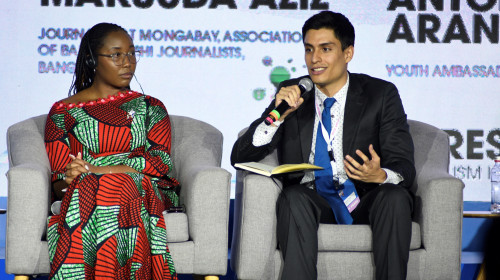
The Role of Youth in Localizing Sustainable Development
Microlearning
 Blog
Blog
Offered by:
Raquel Armendariz Sucunza (Program Associate, Networks & Youth at SDSN)
The Fight for Our Forests and Future
Microlearning
Podcast
Offered by:
Tyson Miller, Director (Earth Insight)



Strengthening stakeholder engagement for the 2030 Agenda
Course
Self-paced e-learning
Offered by:
UNITAR, UN DESA