
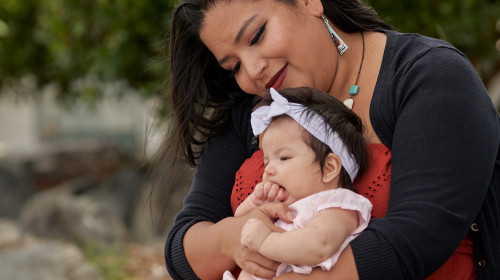
The purpose of this course is to train national statistical organizations in developing countries and public health stakeholders interested in estimating pregnancy-related mortality from census data. This course aims to increase in-country technical capacity to collect, analyze, and interpret data on pregnancy-related and maternal deaths.
Course Instructors:
Nobuko Mizoguchi, Chief, Training and Statistical Development Branch
International Programs, Population Division
Maria Aysa Lastra, Statistician/Demographer, Training and Statistical Development Branch
International Programs, Population Division
Qingfeng Li, Assistant Professor, Department of International Health
Johns Hopkins Bloomberg School of Public Health
Schedule:
Five video modules for a total of 171 minutes.
Module 1: Understanding Pregnancy-Related and Maternal Mortality Indicators (28 minutes)
Module 2: Census Questionnaire Design, Training, and Tabulation (30 minutes)
Module 3: Evaluating Coverage of Deaths of Women in Reproductive Age (50 minutes)
Module 4: Methods for Evaluating Fertility Data from Censuses (34 minutes)
Module 5: Census Pregnancy-Related Mortality Workbook: Tool for Estimating Pregnancy Related Mortality from a Census (29 minutes)
Target Audience
National statistical organizations and public health stakeholders.
Learning Objectives
Upon completion of the course, participants will be able to:
- Define maternal and pregnancy-related mortality and their indicators
- Identify data sources used to estimate pregnancy-related and maternal mortality
- Know the questions needed to collect data on pregnancy-related and maternal mortality from a census
- Evaluate the completeness of birth and death data from a census
- Estimate, adjust, and interpret female, pregnancy-related and maternal mortality and fertility
- Use the CensusPRM workbook to estimate pregnancy-related and maternal mortality indicators
Offered by
Related

Monitoring Air Pollution Effects under the Convention
Course
Self-paced e-learning
Offered by:
UNECE, UN CC:Learn
DonateWater as Changemakers
Microlearning
 Blog
Blog
Offered by:
Rachael David (Co-founder of the DonateWater Youths Climate Action Foundation), Solomon Abioye Olusegun (Community Manager and Co-founder of DonateWater Youths Climate Action Foundation)

Global Supply Chains; Resilience & Responsibility
Microlearning
Blog
Offered by:
Finn Wynstra (Guest editor-in-chief); Justine Whittern (RSM Editor); Danielle Baan (Editor-in-chief); Linh Nguyen; Merieke Stevens; Rob Zuidwijk; Adriana Domínguez; Harwin de Vries; Albert Veenstra; Morteza Pourakbar; Fanny Chen; Jan van Dalen; Tjarda Becker-de Heer; Pieter van den Berg; Stef Lemmens; Caitlin Dolkart; Cynthia Qingxia Kong; Abed Kayyal
Data revolution and new technologies for the most vulnerable groups
Microlearning
Podcast
Offered by:
Dr. Emmanuel Letouzé, Director (Data-Pop Alliance)