
Water is a basic right, yet it remains one of the most urgent global challenges. Clean water is still out of reach for millions, especially in underserved and marginalized communities. The solutions to this issue are not straightforward, but they demand our collective attention. It’s with this sense of shared responsibility that we, as young people, step up to lead.
Birth of DonateWater
An innovation called DonateWater began to take shape in 2021 during the Open17 Climate Gender Challenge (featured on Goodwall) as part of the GEAR Cycle II Climate Change and Gender Equality Challenge of the Crowd4SDG project, funded by the European Union’s Horizon 2020 research and innovation programme. Crowd4SDG is a youth-focused project that promotes citizen science efforts to address the UN Sustainable Development Goals (SDGs), with an emphasis on climate action. After the completion of the Crowd4SDG project, DonateWater was supported by the UNICEF led initiative YOMA. DonateWater empowers youth and adults to collect, gather and contribute data crucial for decision-making, reshaping the way communities engage and contribute to sustainable development. It stands as a beacon of hope for communities that have long struggled with access to safe and clean water in Nigeria. DonateWater exemplifies how young innovators can tackle issues such as water scarcity in creative ways, putting the spotlight on communities through localized action. It demonstrates the power of youth-led social enterprises.
DonateWater, at its heart, is a youth-driven initiative that directly contributes to the United Nations' Sustainable Development Goal 6 (SDG 6), which aims to ensure availability and sustainable management of water and sanitation for all. The importance of involving young people in the achievement of the SDGs cannot be overstated. Our energy, creativity, and resilience make us catalysts for change. At DonateWater, we recognized a gap - efforts to alleviate problems or scarcity of safe drinking water, sanitation and hygiene, don’t get to the communities who need it the most. We saw a disconnect between the national and global aggregated performance index reports and the local reality. We realized that we could bridge that gap using evidence-based and practical data. Youth, with their energy and connection to the grassroots, could evolve into a movement that produces Citizen Data. DonateWater was determined to provide such a platform.
Specifically, the DonateWater solution was created through the fusion of Blockchain, Geospatial technology and Citizen Science methodology, into a smart app solution that can run on all smart telephonic devices that can run on major mobile operating systems (Android, iOS). The approach is driven via crowdsourcing with the engagements of youth, adults and any citizen who is of age to handle a smart phone.
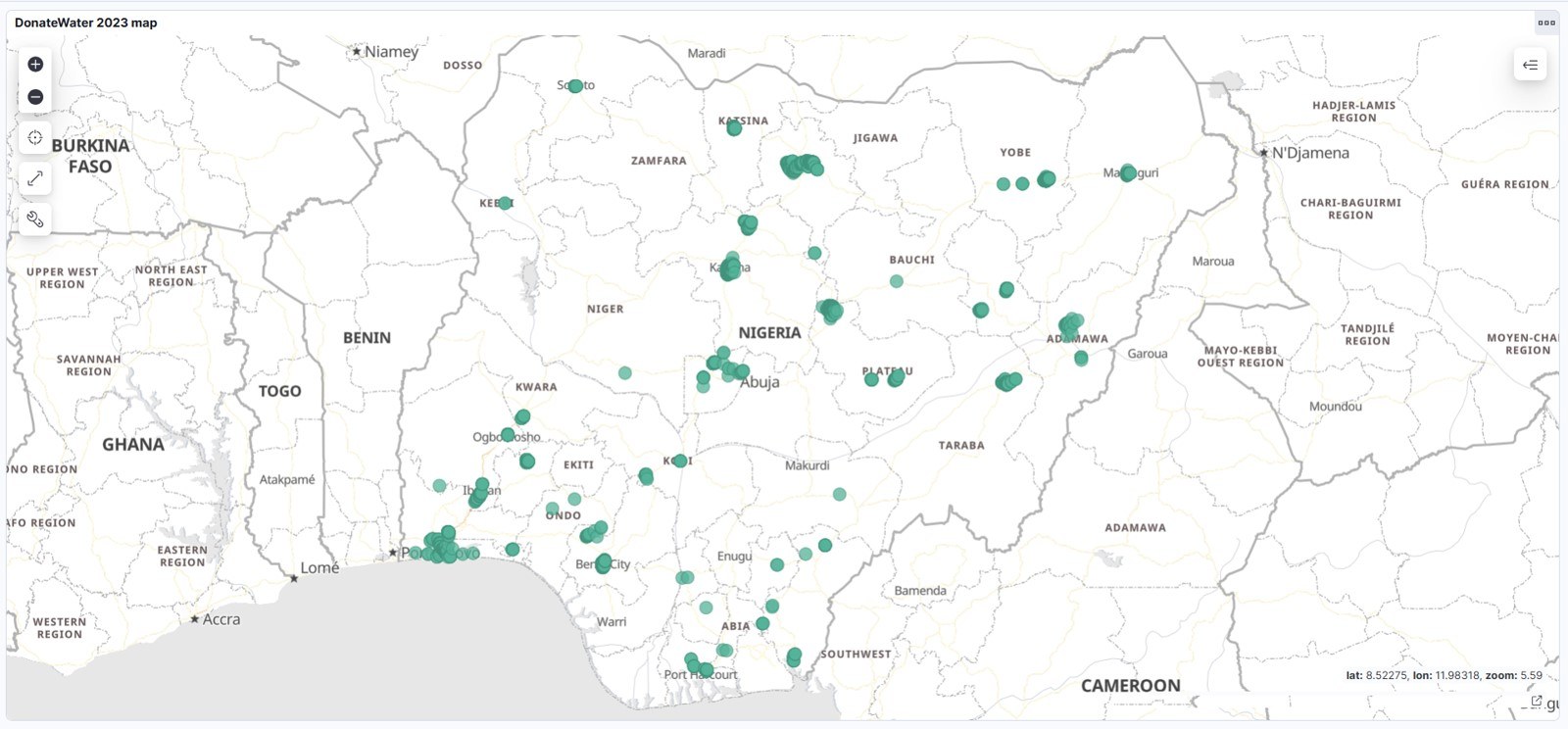
It was designed to have little cost overhead when used. A user only needs internet data when downloading the application to install it the first time. Other times when the internet is required is for upward sending of collected data. The type of evidence-based data gathered using DonateWater’ solution revolves around water points, imageries, geo-location and identifying gender-specific impacts. They include images of the water points, functional or non-functional, distance-time travel, primary use-case, purity level, treatment options, source type, ownership, paid water or free, availability and much more. Water points mapping and data collection can be done as many times as possible offline and stored on the app until the user is ready to send all to the backend.
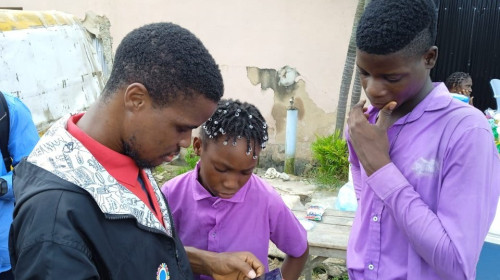
With citizen science approach, young volunteers across Nigeria have become crucial players in collecting and providing actionable data on water sources. Our solution was tested in several regions of Nigeria before its full deployment. This operational research phase was the defining moment for us. Now anyone who wants to contribute data registers on the app and can sign-in after to begin collection of data. DonateWater collects no personally identifiable information on the volunteers or the water points, locations or households involved in the interactions. With advisory support from UNITAR, the data privacy and protection policies were put in place.
Real-time data validation is a unique strength of DonateWater. The data collected and processed by the citizens are manually verified. A small group of volunteers [MI2] called Validators performs these checks to align with the UNITAR’s recommendations on key data components in the aspect of WASH metrics.
Together with YOMA initiative, DonateWater has implemented a unique Token Economy model, which cushions the effects of poverty on the volunteers and translating into development of local businesses via conversion or spending of vouchers and gift cards. Contributions are vetted, scored and tokenized automatically. They are rewarded with native tokens, which can be converted to a voucher, cash, gift, airtime and other utilities. The YOMA initiative allowed us to jointly work with several partners who contributed in diverse ways, such as Fondation Botnar, Generation Unlimited, IIASA, ABC, Caliberco, UNIGE, RLabs, Learning Planet Institute. CitSci. Africa.
The data collected with the DonateWater App helps monitor water accessibility, quality, functionality, and even the community's dependence on the water source. Each entry provides citizens, water sector players, civil society organizations, governments and local authorities with crucial insights to help improve water resource management and sanitation. Through this method of crowdsourcing, DonateWater has successfully involved youth in a direct and impactful way, positioning them as stewards of their environment. The data collected not only contributes to SDG 6 but also empowers communities to advocate for better water policies and infrastructure. Safe WASH is not only a prerequisite to health, but contributes to livelihoods, school attendance and dignity and helps create resilient communities. While recognizing the cascading effects on the mother or girl-child gender in the society, we also advocate for Gender Equality, SDG 5. We have the ability to connect with the communities in ways that large institutions often cannot, understand the local context, and are passionate about building a future where access to clean water and sanitation infrastructure is a given, not a privilege.
All in all, DonateWater is about empowerment. We aim to localize the SDGs, which will lead to true development inside out. Our emphasis is on data-driven results. Our vibrant and young community doesn’t just show up with buckets; they are trained to collect valuable information about the state of local water sources, monitor changes through the seasons, and provide actionable data that can inform policy decisions. This ensures that the solutions implemented are sustainable in the long term.
Childhood Struggles to Global Impact
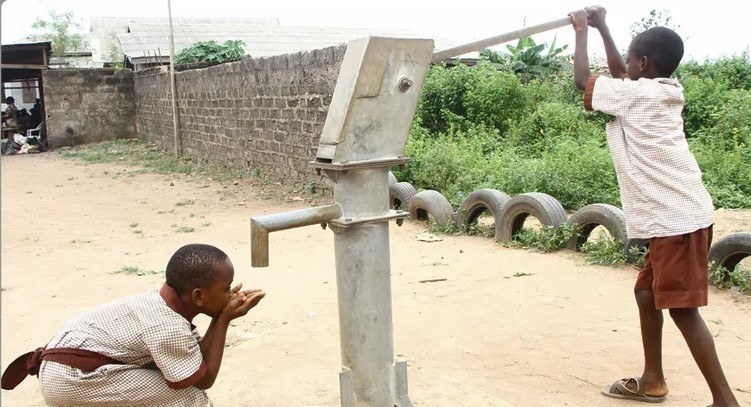
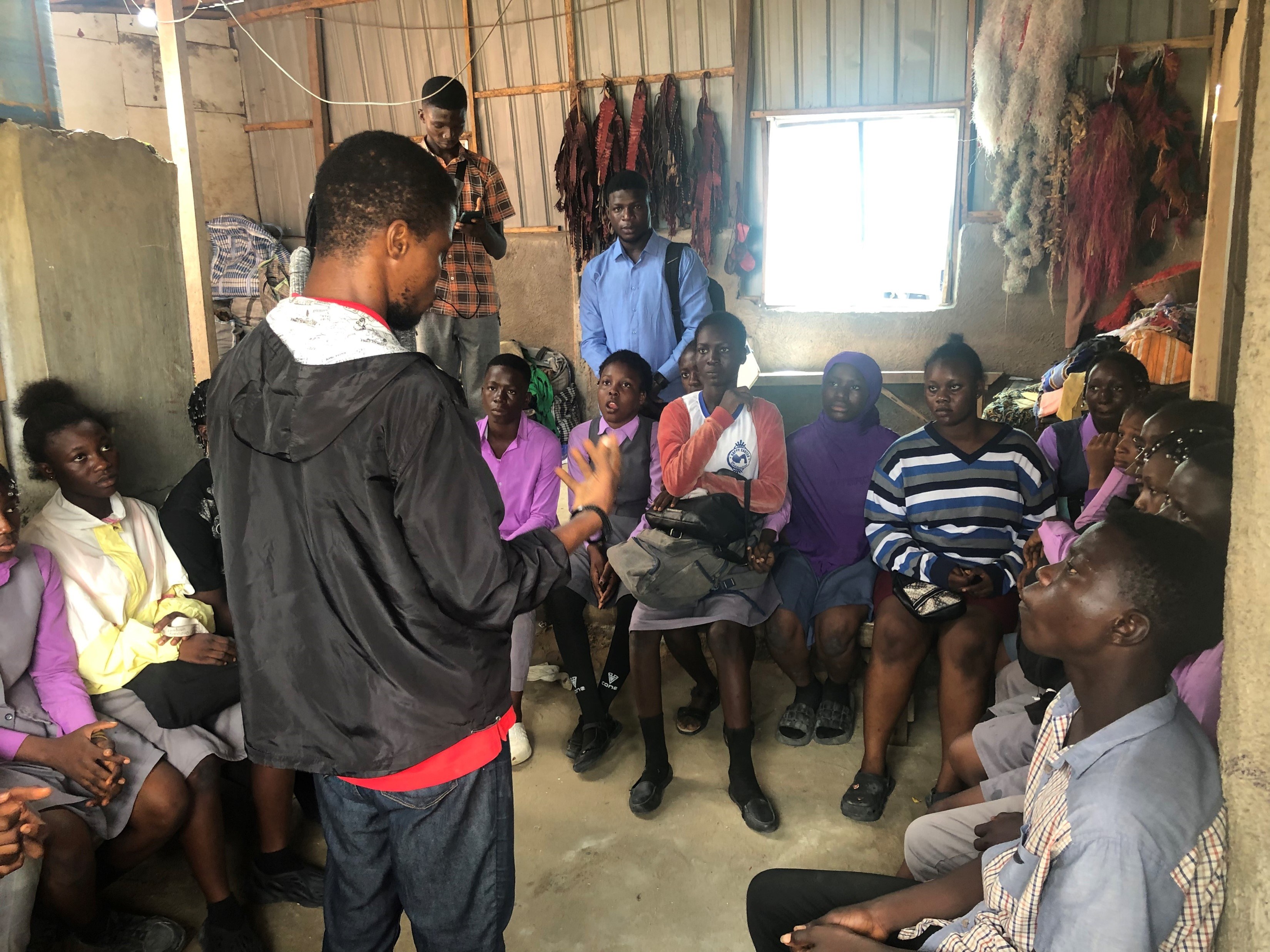
Rachael David - My journey toward founding DonateWater is deeply personal. Growing up in my mother’s village, I experienced firsthand the harsh realities of water scarcity. As a child, I would wake up early every morning, joining the women and girls of our community in the daily search for water. This wasn’t a simple walk to a nearby tap, these journeys spanned miles. We had to leave before the sun came out because the water sources, mostly wells and rivers, would dry up by midday. There was no limit to how many trips we had to make each day.
The burden fell especially hard on girls like me. We would often arrive late to school or miss it entirely because fetching water took precedence. These experiences shaped my understanding of water inaccessibility not just as a supply issue but also as a barrier to education, health, and equality. Many times, we risked our lives for this water. And the worst part? There was no way to truly capture the story. There was no data to convey the full scope of the problem. As I grew older and realized that many rural communities still suffer from the same lack of access, I knew I had to take action. Now, as an adult, I’m focused on finding ways to bring attention to the issue. My experiences continue to drive the efforts of DonateWater, ensuring that no girl has to sacrifice her education or her safety just to find water.
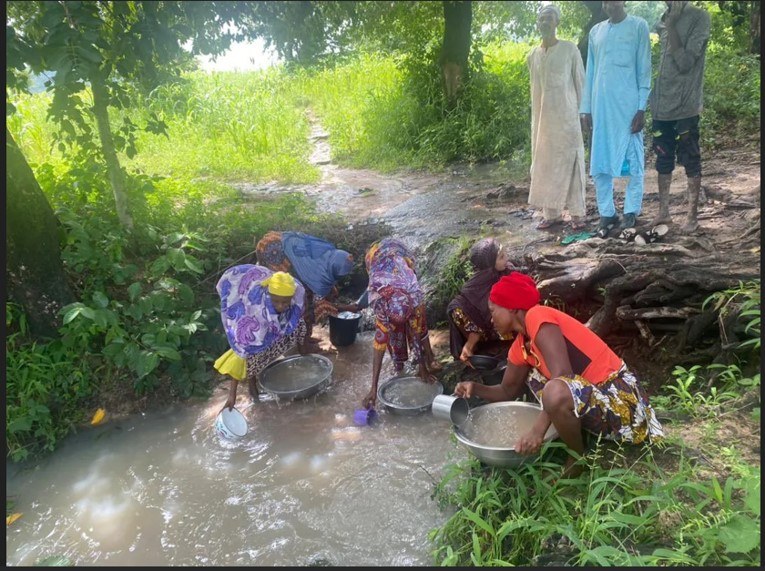
Solomon Olusegun Abioye - For me, founding DonateWater is part personal experience and part desire to lead a cause that can positively affect people’s lives. Growing up, my family lived in a rented apartment in a community where government water infrastructure simply didn’t exist. There was no public water supply, households were responsible for providing their own water from scratch. Unfortunately, not all landlords, including ours, could afford to do so. It was a luxury only a few could manage, and those who could quickly turned it into a business, selling water to others in the community.
Even though we had to pay for every drop of water, my older siblings were still responsible for fetching it before and after school every day. I remember days when they were punished at school for being late because of this. Paying for water became the norm, even though it wasn’t pleasant. This situation hasn’t changed much. Even today, there are hundreds of communities, even in urban areas, where access to water is limited or non-existent. Those who can afford it dig their own boreholes, and millions of tenants continue to pay regularly for clean water just to drink and cook with. These personal experiences, combined with my desire to contribute to a better world, are what drive me to be part of DonateWater. I want to ensure that others don’t have to go through what we did growing up.
Stories of Young Participants Making Meaningful DonateWater Contributions
The story of DonateWater’s success lies in the personal stories of the young volunteers who have contributed to the initiative. One such story is of a young participant from the rural regions of Nigeria who, despite having limited access to resources, became one of the top contributors during a recent data collection challenge. Armed with a smartphone and a passion for change, this volunteer mapped over 150 water sources in his local area, often traveling long distances on foot to document the state of wells, rivers, and other critical water points.
Chioma Okongwu, a participant from Bayelsa State, shared her experience with DonateWater, highlighting her motivations. "I took part to earn additional income. DonateWater offered the option to earn and support myself. I am also using this action to give my support for the unsafe water cause," she explained. Bayelsa State, where Chioma resides, faces rampant water pollution due to oil production, making safe water access a critical issue. By contributing data through the initiative, Chioma is not only earning rewards but also bringing attention to the water crisis in her region, helping advocate for cleaner, safer water in her community.
Another volunteer, a young woman, shared her story of balancing her schoolwork with her participation in the initiative. Inspired by her own experiences of water scarcity growing up, she spent her weekends visiting neighboring villages, documenting water sources, and contributing critical data. For her, this was not just a project, it was a way to give back to her community and ensure that future generations wouldn't have to face the same struggles she did.
Yahanasu Nasir, another participant in the DonateWater challenge, highlighted the unique opportunity the initiative provided to witness firsthand the water issues in their locality. Initially drawn to the challenge by the prospect of earning tokens (extrinsic motivation), Yahanasu perspective shifted after engaging with community elders who shared stories of their ongoing water struggles. “Hearing those stories gave the cause a personal feel and honesty for me,” Yahanasu noted. The initial desire to earn rewards evolved into a deeper, intrinsic commitment to support the cause and help address water inaccessibility in the community
Joy Banso, a participant from northern Nigeria, shared how the DonateWater NG3 (third data collection exercise) challenge resonated deeply with the water struggles her community and household face. Living in a region where the climate is dry and hot, and drought is common, Joy’s survey experience revealed striking personal facts: “Only 20% of the water sources I documented were safe, while 80% came from unsafe hand-dug wells.” During the dry season, her family often resorts to purchasing sachet water and relying on mobile vendors, known as mai ruwa, to obtain drinkable water. Her participation in the challenge highlighted these critical issues, emphasizing the need for better water infrastructure in her region.
Abdullahi Onimisi Musa, a participant from Nigeria, shared how the DonateWater challenge pushed them to dig deeper into the water situation in their locality. "It made me do more research, and I gained a deep understanding of the water sources around me," Abdullahi explained. Through his involvement, Abdullahi discovered several unclean, untreated, and contaminated water sources that people were still using, which deepened his understanding of the severity of the issue. He appreciated the fact that it felt like a remote job, allowing him to “work and earn” while contributing to a meaningful cause. His participation also encouraged him to explore potential solutions, where he discovered the reverse osmosis technology as a possible method for improving water quality.
Peter Fagbemi, a dedicated participant in all DonateWater activities, shared his motivation for joining, citing both a strong belief in sustainability projects and the rewards offered by the initiative. “I have a deep support for sustainability projects like this,” Peter stated, highlighting how the experience helped him gain valuable skills. Through DonateWater, Peter learned how to collect data efficiently and developed knowledge on conducting surveys, which has broadened his understanding of grassroots efforts toward addressing water accessibility.
The impact of these young participants extends beyond data collection. Our tokenization system allows them to earn while taking action, providing not only a sense of accomplishment but also financial rewards for their hard work. As a result, many of these young people have developed leadership skills, learned the value of community engagement, and taken ownership of the project’s success.
These stories are a testament to the power of youth engagement in achieving SDG 6. The youth involved in DonateWater are leaders and change makers, shaping the future of water accessibility in Nigeria and, eventually, across Africa.
D-WIP:
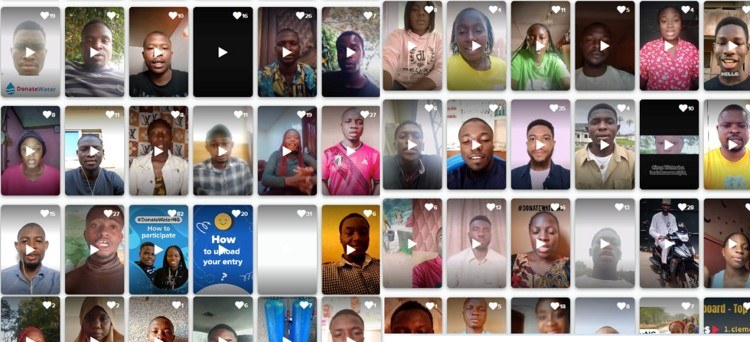
It is satisfying to narrate DonateWater in Progress (D-WIP) and latest wins. At the time of writing this, we mark three years of impacting lives, exposing youth to citizen science, creating awareness about the water ordeal in various communities, empowering youth, equipping them with the tools they need to take ownership of their communities' water challenges. We established a large network of youths who are passionate about bringing change to their respective communities and beyond one drop at a time.
Earlier in 2024, by the invitation of UNITAR, DonateWater was featured on the online side event of the UN Statistical Commission and Collaborative on Citizen Data under the umbrella event: Your Voice Matters: Contributing to the Copenhagen Framework on Citizen Data and its implementation (un.org) to showcase our work on Citizen Data and the potentials.
Speaking of showcasing, the CitSci Africa Association CONF24 maiden edition, which took place in Nairobi, Kenya, featured DonateWater live to present our amazing work across several communities in Nigeria, powered by a huge population of youths, demonstrating their hunger for change and the huge possibilities that Citizen Science holds for the future in national and global development.
In another development, DonateWater made the 2024 World Bank Youth Innovation Challenge: Water Solutions for a New Climate Reality winners list to be among the top 20 teams to win from 1600+ registrations from 65+ countries. The team earned a spot in a 6-month accelerator program, to sharpen our skills, receive market feedback, network with a global community of successful entrepreneurs , water experts, investors and other innovators, in addition to receiving one-on-one mentorship by successful Water tech CEOs.
Quite recently based on invitation, we took our winning mojo to the University of Lagos, following the invitation to support and mentor the Lagos teams in the 2024 SDG OLYMPIAD that was concluded in Paris. One of the teams we worked with won the SDG Olympiad Global Award.
We are glad to announce that DonateWater is now legally known as DonateWater Youths Climate Action Foundation. The name represents an app, a solution, an innovation, organization for change, passion for a cause amidst many other things has led to a movement of the youths, by the youths and for the people. Following the latest developments, our website was revamped. Now upgraded to be more interactive, visual, functional and robust. This will foster more engagement with the public, through writing and featuring articles, news, blogs content related to our works and the SDGs niche.
Looking Ahead
DonateWater, through the data collected so far, across Nigeria, gathered critical insights about the scale of the problem. But water scarcity is not unique to Nigeria; it is a challenge faced by many countries across Africa and the globe. Recognizing this, the future of DonateWater is one of growth and expansion amidst many challenges it is facing as a young youth-led foundation. By leveraging the power of data and local knowledge, the initiative aims to provide sustainable solutions that fit the specific needs of different regions. The goal is to reach the farthest corners of Nigeria, covering every community, every village, and every hidden nook where water remains inaccessible. DonateWater plans to expand its reach into other Sahel regions, bringing its unique approach of citizen science and crowdsourcing to tackle WASH inaccessibility.
About the authors
Rachael David is a Co-founder of the DonateWater Youths Climate Action Foundation, where she also serves as the Program Manager on various projects. She currently works remotely as an Executive and Tech Assistant for an AI-focused company and its subsidiaries based in Asia. Rachael recently graduated with a BSc in Psychology. in Psychology from the University of Ibadan, Nigeria. She is an awardee of the 2024 World Bank Youth Innovation Challenge highlighting her dedication to climate action and innovation and was a Finalist in the GEAR Cycle II Climate Change and Gender Equality Challenge of Crowd4SDG Project in 2021.
Solomon Abioye Olusegun is the Community Manager and Co-founder of DonateWater Youths Climate Action Foundation, where he also serves as the Technical Operations Lead. A trained Tech and Software Support Engineer, Solomon leverages his skills in freelance work during his spare time. He graduated top of his class in 2023, with a First-Class BSc. in Psychology from the University of Ibadan, Nigeria. Notably, he was a Finalist of the GEAR Cycle II Program on Climate Change and Gender Equality Challenge of Crowd4SDG in 2021, demonstrating his commitment to environmental sustainability and youth empowerment. In addition, he is an awardee and Lead at the 2024 World Bank Youth Innovation Challenge accelerator program highlighting his leadership and dedication to addressing global climate and water challenges
Related
Developing Skills for Women Leadership in Climate Action
Course
Self-paced e-learning
Offered by:
UNITAR, C40 Cities
Good Practices and Resources on Sustainable Development Goals Monitoring
Resource
Training material
Offered by:
UNSD
Utilizing satellites to bring electricity to the most vulnerable groups
Microlearning
 Podcast
Offered by:
Camila dos Santos Gonçalves (Space Power, Founder), Grace Chenxin Liu (Space Power, Editor-in-Chief)

The Paris Agreement on Climate Change as a Development Agenda
Course
Facilitated e-learning
Offered by:
UNFCCC, UNSSC