

Why Participate?
In a first-of-its-kind effort, the book 'Counting Feminicide: Data Feminism in Action' (2024) documents the creative, intellectual, and emotional labor of data activists across the Americas as they work to fill the institutional gap in counting femicides and gender-related killings. One of the book’s central arguments is that it is not computer scientists, think tanks, philosophers, or policy experts who are leading the way in the ethical use of data for public benefit, but rather grassroots feminist data activists, predominantly from Latin America. These activists are at the forefront of data ethics in the service of justice.
This book aspires to speak to multiple audiences across various geographies. While the resource is currently available only in English, the Book Club offers a unique opportunity for Spanish, Portuguese, and English speakers to explore this important work in a guided manner, enriched with additional insights from the author.
How Does it Work?
Our Book Club allows participants to immerse themselves in the work of grassroots data activists who illuminate feminicide by engaging in care, memory, and justice. Over the course of the club, participants will engage with the book, and join discussions within the Eureka community. Tailored features, including chapter summaries available in text and audio in English, Spanish, and Portuguese, help participants stay on track and encourage meaningful conversations. Recordings of discussions with author Catherine D’Ignazio are also available on our YouTube channel.
About the Author
Counting Feminicide: Data Feminism in Action (freely available in PDF format here) is authored by Catherine D’Ignazio, Director of the Data + Feminism Lab at MIT and co-author, alongside Lauren F. Klein, of the highly acclaimed Data Feminism (2020). In this earlier work, they outlined the seven principles of data feminism, which are embodied and put into action by the data activists featured in Counting Feminicide.
Partners and Sponsors
This initiative is supported by Data-Pop Alliance, Eureka, Data Against Feminicide Project, Data + Feminism Lab, Data Feminism Network, and the MIT Press.
Target Audience
Who is this Book and Movie Club for?
Academics, activists, journalists, policymakers, planners, and citizens who care about:
Gender-related violence and the role that feminist movements and grassroots initiatives are playing in addressing it with data, especially in Latin America.
How data, data visualization and AI can be used for social justice. The book critiques conventional data science practices to demonstrate how feminicide data activists are enacting a data ethics that centers care, memory, healing and structural change. This approach is called “restorative/transformative data science”.
Learning Objectives
Participants of this Book Club will be able to:
- Explore the care, memory, and justice work conducted by grassroots data activists in the Americas as they document feminicides and gender-related killings, and gain an understanding of the challenges these activists face (e.g. missing data) and how they systematically work to overcome them (e.g., producing counterdata).
- Gain knowledge of the four stages of a restorative/transformative data science project—Resolving, Researching, Recording, and Refusing + Using—conceptualized by the book's author through interviews with dozens of data activist groups.
- Develop a clear understanding of 'restorative/transformative data science' and how this approach challenges the hegemonic and extractivist logics of mainstream data science, while contributing to create a world on which all women live a life free of violence.
- Access key tools and resources for starting or improving a feminicide data project or for collecting activist data.
Offered by
Related
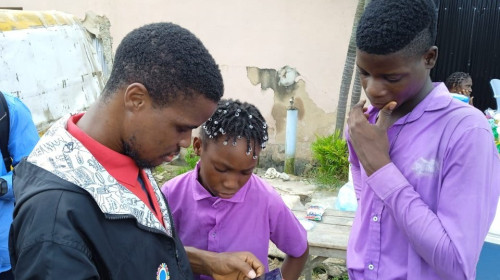
DonateWater as Changemakers
Microlearning
 Blog
Blog
Offered by:
Rachael David (Co-founder of the DonateWater Youths Climate Action Foundation), Solomon Abioye Olusegun (Community Manager and Co-founder of DonateWater Youths Climate Action Foundation)

Countering disinformation and promoting integrity in public information
Microlearning
Podcast
Offered by:
Dr. Julian Jaursch, Project Director (Stiftung Neue Verantwortung (SNV) Berlin)