

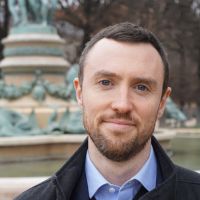
In this episode of SDG Learncast, we are speaking with Mr. Guillaume Lafortune, Vice-President of the UN Sustainable Development Solutions Network (SDSN) and lead author of the Europe Sustainable Development Report 2025 (ESDR). We will unpack the key findings of the latest ESDR, examining the slowdown in SDG progress across Europe and the challenges that lie ahead.
Set against a backdrop of rising populism, geopolitical tensions, and climate risks, this conversation dives into urgent priorities for the new EU leadership (2024–2029). Topics include persistent inequalities, international spillovers from EU consumption, the transformation of food systems, and the role of European leadership in shaping global sustainability efforts.
We also spotlight the outcomes of the Fourth International Conference on Financing for Development (FFD4), hosted in Spain, and discuss how Europe can lead reforms in global financial architecture to support SDG acceleration.
This episode explores how innovative financing, policy coherence, and new forms of SDG diplomacy can help Europe not only get back on track but also catalyze sustainable development globally.
[What follows is a transcription of the podcast, modified for enhanced web readability.]
Paulyn Duman: Welcome to the SDG Learncast with me, Paulyn Duman. In every episode, I bring you insightful conversations around the subject of sustainable development and learning, helping us all to achieve a sustainable future.
Today, we are joined by Guillaume Lafortune, Vice President of the UN Sustainable Development Solutions Network, or SDSN, and lead author of the Europe Sustainable Development Report 2025.
We will unpack the slowdown in SDG progress across Europe, urgent priorities for the new EU leadership, and Europe's role in shaping global sustainability. We will also spotlight outcomes from the recent Financing for Development conference in Seville, Spain, and what they mean for reforming the global financial system.
Thank you so much for joining us. To start, could you briefly share your role at SDSN and what drives your work on sustainable development?
Guillaume Lafortune: First of all, it's a pleasure to be here, Paulyn. Thank you so much for inviting me again. I'm the Vice President of the UN Sustainable Development Solutions Network, or SDSN for short, which is the largest network of researchers and scientists mobilized around solutions for the Sustainable Development Goals.
The network advances collaborations and solutions at the campus, city, national, and regional levels, always with a strong role for universities and research institutions.
A second aspect of our work at SDSN is education for sustainable development via the SDG Academy program, which aims to integrate sustainable development into curricular and teacher training, and also democratize access to education for sustainable development.
The last piece of work we do is in our research capacities. We are a think tank within the Secretariat, and we do a lot of work on long-term pathways, financing the SDGs, and policy briefs where we bring scientists to specific biodiversity hotspots to assess the situation via science panels.
We also do a lot of work on data and monitoring—and I think that’s what we’re going to discuss today—one of our flagship reports for Europe, which we produce to track SDG progress and performance. Of course, we also do this at the global level through the Sustainable Development Report. The global edition was actually released just last week as well.
Paulyn Duman: Thank you so much, Guillaume. I think let's dive into the 2025 Europe Sustainable Development Report. It showed a significant slowdown in SDG progress, I think since 2020. What were the main drivers of this trend, and what should the new EU leadership prioritize to reverse it?
Guillaume Lafortune: Before diving into the European situation, I'd like to take just a quick step back and look at where we're standing 10 years after the adoption of the SDGs at the global level, and then focus on the European challenges and issues.
Globally speaking, when we look at the 17 goals, 10 years into the SDGs, none of them are currently on track to be achieved. This was the finding from the global edition, which we just released last week. And there are certain goals that are particularly off track. Those would be related to SDG 2 on diets, undernourishment, and sustainable and productive agricultural systems, but also SDG 11 on sustainable cities and communities, and SDGs 14 and 15 on terrestrial and marine biodiversity.
And I think this is not a surprise, but there are also major issues around SDG 16 on peace, justice, and strong institutions.
When we look at the specific targets or indicators — and we track about a hundred of them — it's only about 17% of those targets that are on track.
Essentially, what we argue is that this is not due to a lack of commitment. There are 190 out of 193 UN member states that have taken part in the voluntary national review process, where they presented their action plans for sustainable development. We see growing engagement also at the local level via voluntary local reviews, for example.
But this is largely due to issues around, of course, raging conflicts and geopolitical tensions, but also issues around the lack of financing and fiscal space, especially in the developing world.
So when we look at the situation for Europe at the global level, we should start by saying first that when we look at the SDG Index, 19 out of the top 20 countries are actually from Europe — and many of them are from the European Union — which basically shows that Europe cares for this agenda. Not only, I would say, since 2015, but the idea of combining economic and social prosperity with environmental sustainability has been part of EU policymaking for a relatively long time.
And if you go back to the Treaty of Lisbon, you will find the term "sustainable development" mentioned. And of course, the first major UN conference on the human environment was organized in Stockholm, Sweden, in 1972.
So this is the global perspective on Europe. Having said that — and this is what we discuss in the European edition of this report — the reality is more complex, of course.
First of all, historically, Europe and the United States are responsible for the bulk of cumulative greenhouse gas emissions — basically since the first industrial revolution. And so, this gives those countries a special responsibility when it comes to addressing these issues, not only within their own territories but also internationally.
The second point is the issue of international spillovers — the fact that some of these good performances in Europe are achieved by outsourcing some of the negative impacts abroad. These could be environmental or social, for instance, notably via unsustainable consumption and supply chains.
The third point — and this was at the heart of your question — is that yes, Europe is still among the best performers on sustainable development, but the dynamics are becoming more and more challenging. When we look at the progress since 2020 on this agenda, we basically see stagnation and, in some cases, reversals in progress — including, sometimes, in social targets — while environmental goals continue but at a relatively slow pace.
And then the fourth point would be that there are also major challenges that lie ahead for Europe. This was made very clear in the Draghi report, which was submitted right before the new leadership of the European Union came on board a few months ago. There are clear demographic, geopolitical, financial, and technological challenges that lie ahead for Europe, which require clear direction, vision, and investments.
Just to unpack some of the reasons that can explain the stagnation since 2020 — of course, the COVID-19 pandemic and the geopolitical crisis played a role.
I'd emphasize the importance of having a clear vision and maintaining the European Green Deal as the growth agenda for Europe and for competitiveness, while also addressing some of the persisting issues around fragmentation within the European Union. If those can be addressed, they can boost and accelerate this transition in Europe.
Paulyn Duman: Can you highlight what fragmentations are apparent or are happening in Europe, and how is the EU Green deal trying to address those?
Guillaume Lafortune: When the European Green Deal was introduced back in 2019, I think it’s clear that Europe was perceived as the global leader on this agenda. Europe became the first continent to set a bold target for deep decarbonization and achieving net zero by mid-century. And we could tell that this inspired a lot of other countries and regions afterwards, with the number of net zero commitments multiplying all over the world.
I think what happened basically—and I would say especially since 2022—is a bit more confusion in terms of the strategic priorities of Europe.
Of course, with the rise of geopolitical tensions, there are now new announcements on the need to increase, for instance, military expenditure. There has been a call to scale back ambition, simplify procedures, and sometimes even calls for deregulation. There’s probably a little bit of confusion right now in terms of strategic orientations.
When I speak about the fragmentation, there’s a lot of debate around how we are going to finance this agenda and the investments that are needed in zero-carbon energy systems, but also in some of the cutting-edge technologies for the competitiveness and prosperity of Europe—like AI, large language models, and other sorts of technologies.
One thing that strikes me in Europe is the fact that there are large private savings. About half of the top 100 universities in the world are in Europe or in the UK. Yet, a lot of the inventions—and a lot of the savings—actually flow outside of Europe, and many European innovators actually innovate in the US. There’s about €300 billion of European savings that flow annually to the United States.
This is partly due to the fragmentation in the European capital markets. All the announcements that have been made about moving forward on the savings and investment union—or what’s sometimes also called the Capital Market Union—are an important move, so that we mobilize Europe’s large private savings to invest in Europe.
Especially if they are targeting the right sets of industries, which, in my mind, should be the clean and digital transformations—objectives that were, of course, at the heart of the European Green Deal back in 2019.
Paulyn Duman: So, Finland, Denmark, and Sweden — they continue to lead the SDG Index. What lessons in governance or financing can be drawn from these countries and scaled across the EU? And is there something within these countries that addresses what you just said about fragmentation? Is that something they are addressing better?
Guillaume Lafortune: Great question. You are right, Paulyn. Finland is still in the lead this year in the European Sustainable Development Report, and also globally, as the most sustainable country in the world.
Having said that, whether we speak about Finland, Sweden, Denmark, or other Northern European countries, they still face challenges in achieving at least two or three of the SDGs.
In the case of Finland, there are major challenges when it comes to SDG 2, for instance, with issues around unsustainable diets. There are also challenges with SDG 12 and SDG 13, which are partially driven by negative international spillovers.
So the point here is: the SDGs — and many of the goals — still remain relevant for those countries, even if they are in the lead.
To your question, perhaps I’ll emphasize just two points on Northern Europe.
First of all — and this is my personal conviction — the governance model in Northern Europe, characterized by what we sometimes call social democracy, works well for those populations. It is, of course, the fruit of history, culture, perhaps geography, and many other factors. But the social democracy, the large welfare systems, and the mixed market economy have worked.
Finland has a long tradition, for instance, of inclusive policy processes — with many citizen panels that have been mobilized in the context of the SDGs, a lot of engagement processes and audit systems, and very sophisticated democratic governance systems. This is combined, of course, with large and continued investments in renewable energy and, as I said, relatively large and generous welfare systems.
So that’s clearly one point. I think there’s something — at least not too bad — in the governance frameworks of those countries, which at least work well in their context.
The second point I’d like to make is that it’s interesting to see that Finland is the most sustainable country in the world — and it’s also the happiest country in the world. SDSN also contributes each year to the World Happiness Report, and it’s a country that has been characterized for a relatively long time by pursuing a policy of moderation and even neutrality in international relations.
There’s even a term for this, which is “Finlandization,” basically. To some extent, this tradition was also the tradition of a country like Sweden.
The point here is: as we are moving into this multipolar world, with a number of major poles around the world — and in between, there will be middle powers trying to figure out how they should position themselves — there’s probably a lot of interesting research that can be done around the concept of moderation, neutrality, and its implications for happiness and sustainable development.
Finland is one example, perhaps Sweden as well. Even countries like Austria perform fairly well on the SDG Index. A country like Costa Rica, for instance.
And I would even say we do a lot of work with Central Asia — a country like Uzbekistan, for instance, is among the countries that have progressed the fastest on the SDGs. Since the early 1990s, Uzbekistan has also adopted neutrality as a key concept in its foreign policy.
So it’s interesting to see that, from a governance perspective, there’s clearly something good. But I think this idea of moderation and neutrality in foreign policy might also have played a role in explaining the significant progress, and the level of happiness and sustainability, in countries across Northern Europe.
Paulyn Duman: That is a very interesting insight. Let me also highlight what you said about how, even among the top countries, there are still SDGs that are not being achieved.
We’ve been focusing so much on the best, right? But what is also important is the Leave No One Behind principle in the 2030 Agenda.
The Leave No One Behind Index points to worsening trends in poverty, inequality, and access to services.
How is the EU ensuring that marginalized and vulnerable communities are meaningfully included in its recovery and transition strategies?
Guillaume Lafortune: Yeah, of course, Paulyn — and great question.
Europe remains the most equal continent in the world, with the most advanced welfare systems, which help make significant transformations more acceptable to the population because you have safety nets.
But the dynamics are not always heading in the right direction. Especially since 2020, we see stagnation on average — but that also means there’s been some reversal of progress related to poverty, the quality and access to key services, and income and wealth inequality.
The one dimension where we still see progress is gender equality, driven by some countries that started from a lower baseline and have shown greater representation of women in parliament — including in some Eastern European countries.
The key issue right now for Europe is to define its long-term vision. And we’re talking, Paulyn, just a few weeks before the European Commission will actually present the first draft of its long-term budget, which is called the Multiannual Financial Framework (MFF). This will basically set the budget priorities for the period 2028 to 2035 — so it's a very important and crucial moment for Europe.
Europe is the leader of the SDG Index, with among the highest life expectancy and highest levels of life satisfaction.
It also has high-quality infrastructure, huge innovation capacities, most of the best universities in the world, and a very large single market of 450 million people.
And so, for me, the key strategy to address the Leave No One Behind issue — but more generally to make the EU competitive in the 21st century — first and foremost, has to revolve around keeping the European Green Deal alive.
Right now, there is a lot of backlash against the European Green Deal, but the Commission had the right idea in introducing it, and it should remain the long-term vision and strategy for Europe.
This is not the time to scale back ambitions. We see China making breakthroughs in renewable energy production. But even in other places, like the Gulf States, business regulations are also moving forward.
On the budget side of things, there are negotiations around the Multiannual Financial Framework.
We had the Draghi report a few months ago, which said we need to invest an additional €800 billion per year to advance the green and digital transformations.
The EU’s long-term budget was closer to 2% of GDP than 1%. In my perspective, it’s hard to imagine how going back to a 1% of EU GDP budget would help achieve the goals laid out in the Draghi report — but also, more broadly, in the European Green Deal.
And fifth — and this is my last point — diplomacy is a very cost-effective strategy. War is really expensive, but diplomacy is far less costly than war.
Paulyn Duman: You've mentioned that large negative spillovers from EU consumption and trade contribute to its higher ranking. Could you unpack this — especially how parts of the value and supply chain are outsourced to other countries? More importantly, how can the EU reduce its global environmental and social footprint while remaining economically competitive?
Guillaume Lafortune: Yeah, this is a very important point.
There’s a poet from Martinique, Edouard Glissant, who used to say we should act locally but think globally — which summarizes well the way SDSN operates, with local networks connected to a broader global set of research entities.
This issue of international spillovers means that when you act at the national or local level — which is great and necessary — you should also take into account the possible negative effects that this might have on the rest of the world. Because at the end of the day, the SDGs are a global responsibility.
This is very well recognized under SDG 17, which calls for partnerships for the goals, but also for policy coherence.
So, when we talk about international spillovers, we mean all those negative or positive impacts that can be generated by one country’s actions on the rest of the world.
For example, when a country increases its budget on official development assistance, this can be considered a positive spillover — sometimes called a “handprint.”
And indeed, when a country consumes materials that come from unsustainable supply chains — that drive deforestation, water scarcity, or CO₂ emissions — it can have negative impacts abroad, which must, of course, be addressed.
The same can be said when a country engages in unfair tax competition or generates profit shifting or tax havens. This undermines the ability of other countries to mobilize resources to advance the transition.
So, when we assess SDG performance and progress, those impacts should be incorporated in our monitoring. And when you do incorporate those impacts, you can sometimes get a slightly different picture of how SDG performance looks.
It actually helps explain the difference between SDSN’s assessments and other assessments that exist on SDG status and progress.
To your question: we should not lose hope when it comes to building a sustainable international trade system.
It’s hard to talk about these issues these days, with the World Trade Organization under threat from trade wars and rising tariffs. But a large proportion of international trade still operates under WTO regulations and rules.
Here, Europe should continue to pave the way for building sustainable standards and cleaning up international supply chains — via negotiations and coalitions of the willing at the World Trade Organization.
Europe should not water down its key regulations on corporate sustainability reporting — the CSRD — and the directive on corporate sustainability due diligence — the CSDD.
There was actually an opinion from the European Central Bank that called for prudence when it comes to watering down those regulations, because doing so will not help the EU achieve competitiveness or the other objectives it has in mind.
A well-designed carbon border adjustment mechanism can also play a role. These measures can be good for Europe and good for the world.
Specific measures can be taken, because spillovers can happen not only through imports and consumption, but also through the export of certain dangerous products abroad — such as toxic pesticides or plastic waste sent to countries that cannot manage the waste.
So, the adoption — and especially the implementation — of specific regulations in Europe can be strengthened to address those spillover effects.
Paulyn Duman: That brings me to the recent Financing for Development Conference in Spain, where the idea of a coalition of the willing was emphasized. Since you were there, could you share some key takeaways — particularly on what it means for EU development and fiscal policy, and how Europe can help lead reforms in the global financial architecture to better align with the 2030 Agenda and the SDGs?
Guillaume Lafortune: Perhaps just to unpack a little bit — when we look at the global level, none of the SDGs are on track, and we're talking about only 17% of the targets being on track. The goals are not being achieved, first of all, because of raging conflicts and geopolitical tensions, but also because of a lack of financing and fiscal space issues in, roughly speaking, half of the world's countries.
At the end of the day, the Sustainable Development Goals are largely an investment agenda — into physical infrastructure, renewable energy, digital infrastructure, transport, and social programs like health, education, and social protection systems. Yet, about half of the world spends more each year on debt servicing than on education and health.
At the global level, the SDG financing gap is estimated by the UN at about USD 4 trillion per year — roughly 4% of global output. This is, of course, very significant — especially at the country level. But it is within reach if we think about it at a global scale.
The annual gross savings that can be mobilized in principle to invest and fill this financing gap represent about 25% to 30% of global GDP. So, we have an SDG financing gap at 4%, and global savings that could be mobilized at 25% to 30%.
There’s nothing impossible here — the real challenge is how we mobilize those savings so that they flow to the countries and people with high SDG impact potential. That’s what’s at stake.
And this is at the heart of what people call the reform of the global financial architecture — or the reform of the international financial architecture.
On the European side of things: on one hand, many European countries have decreased official development assistance lately due to budget constraints and tensions in Europe — including France, the United Kingdom, and others.
But on the other hand, I would say that Europeans have also been playing a leadership role in advancing the reform of the global financial architecture.
I can mention just three aspects before diving into Seville in particular.
We had, in 2023, the Paris Summit on Financing for People and Planet, which led to the 4P Initiative — the Paris Pact for People and Planet — led by the French government. Over the last two years, we've also had the Hamburg Sustainability Conference to mobilize private financing. And of course, Spain just hosted the fourth International Conference on Financing for Development.
I think Europeans are playing an important role in advancing this reform of the global financial architecture and shifting the narrative around financing — so that we begin to see investments in sustainable development as high-return investments, and move away from a short-term focus on potential liquidity crises toward thinking in terms of SDG impact potential.
On Seville, a few points:
First of all, the formal withdrawal of the United States from the negotiation made it possible to adopt a relatively good outcome document — the Compromiso de Sevilla — which does mention sustainable development and climate. This is good news, and we can build on the Compromiso in the coming months and years to advance a number of issues on the financing side.
There has been relatively good progress, for example, on global levies to finance some of these investments — and hopefully, investments in safeguarding global public goods. I’m thinking about the agreements reached a few months ago on a levy for the shipping industry, but also the progress announced around a levy for private jets and business class tickets. There is some leadership here from France and Spain, for instance.
A final point: the reform of the MDBs and PDBs — the multilateral development banks and public development banks. These institutions are key — especially the MDBs — because they can mobilize financing at lower rates than individual member states. Their borrowings are guaranteed collectively by all member states, which is why they are typically rated AAA, while individual countries are sometimes rated as junk bonds or have very low credit ratings.
So, I think it's very important to scale up and align the financing of the MDBs.
When we look at the Compromiso, there are a lot of references to the MDBs — more than in the previous international Addis document from ten years ago, the previous meeting on financing development.
A lot is moving forward — including on measuring impact, expanding local currency instruments, and ensuring that MDBs work together as a system to advance the transformation.
The main takeaway is that the international community managed to come up with an ambitious document — which was not a given, considering the U.S. opposition to the SDGs, climate action, and any references to those concepts.
So, this is a great outcome, and we can build on the energy of Seville to continue advancing some of the reforms to the global financial architecture.
Paulyn Duman: It seems that the U.S. stepping back may have created a space for other countries to step up, and perhaps the Compromiso de Sevilla reflects that momentum.
I'd like to shift the focus now to Europe's connection with the Global South.
Based on your report and recent discussions in Spain, what are the key recommendations for building stronger partnerships with the Global South?
And how can the EU align its trade, development, and climate finance policies — not just with the 2030 Agenda, but also with long-term global equity?
And what does moving beyond short-term fiscal thinking really mean in practice?
Guillaume Lafortune: This is at the heart of all the discussions these days about how to scale up access to long-term and affordable financing.
Your question had more to do with foreign policy and partnership building. One concept that we’ve been pushing is this idea of SDG/European Green Deal diplomacy — which is the idea that the EU should incorporate sustainable development and climate action in all its partnerships and interactions with the rest of the world.
There’s one important instrument that was put forward by the EU to advance investments — mainly into large infrastructure projects in developing countries — and that is the Global Gateway Initiative, more or less the equivalent of China’s Belt and Road Initiative.
Hopefully, the long-term EU budget will give additional financial firepower to this initiative. I believe the goal is to mobilize about €300 billion by 2027. Currently, about half of that has been mobilized.
To give a very concrete example, I think we could imagine a world where the EU builds win-win partnerships with one of the poorest regions in the world — like the Sahel region — which is not only one of the poorest, but also one of the regions with the greatest number of sunny days per year.
And in a context where the EU is looking for ways to lower the price of energy and increase its competitiveness, this is a clear example of the kind of win-win partnerships that can be developed to advance clean and cheap energy in Europe.
More broadly, under European diplomacy, Europe should talk with diverse groups of partners. There are good things happening in China. The EU is advancing discussions with India as well, with Asia, Africa, and Latin America — including Brazil.
This is what should really be at the heart of European diplomacy: building win-win partnerships and having a dynamic and proactive approach to partnership building.
Diplomacy in a multipolar world has to go way beyond the use of sanctions. First of all, unilateral coercive measures or sanctions are illegal under international law. They harm populations more than anything else.
If we look at one of the countries that is not progressing — for example, Venezuela — it has been under U.S. sanctions for more than 20 years.
I would hope that there can be innovative ways to engage in diplomacy and to solve some of these geopolitical tensions.
Paulyn Duman: The year 2030 is really just around the corner — we are already halfway through 2025. Where, and how, should Europe act most urgently to accelerate SDG progress? Where do you see hope?
Guillaume Lafortune: There are two reasons why we're not achieving these goals. Financing is one, but at the heart of this, it's really hard to achieve sustainable development when you have raging conflicts and when you do not have peace.
So here, I would hope that Europeans can play a role in lowering the levels of tension and basically making sure that we don't blow up the world before 2030. Because we're talking about post-2030 — but when I look at the Bulletin of Atomic Scientists, which produces a Doomsday Clock (an annual assessment of how close we are to self-destruction), the clock is now at 89 seconds to midnight. The last update was in January. This is the closest we've ever been to self-destruction since the clock was set up after World War II.
So here, I think Europeans can play a big role — in principle — in promoting diplomacy, dialogue, and smart ways of implementing a number of treaties, including the Treaty on the Non-Proliferation of Nuclear Weapons.
If we want a post-2030 agenda, we need to make sure the world continues to operate until 2030. Peace and diplomacy, for me, are absolutely crucial.
Secondly — and we've been doing this at SDSN — are assessments of country support for UN-based multilateralism. This was part of the report also launched last year, where we used a number of metrics to track how much countries promote UN-based multilateralism.
And for Europe’s voice to continue to count in the world and to remain credible — including on the 2030 Agenda and other issues — there should be consistency in the way European leaders treat wars of choice, but also in how they respond to decisions from the International Criminal Court, for instance.
There’s been great leadership, and that should be continued when it comes to advancing the reform of the global financial architecture, which will of course remain critical.
Things need to operate as coalitions of the willing, because we have one country in particular that is now officially opposing the SDGs — and also the Paris Climate Agreement, having withdrawn from it.
Still, that means the vast majority of the rest of the world remains committed to those frameworks and agendas. Europe should work with coalitions of countries that still want to move ahead and perhaps extend the SDG framework to 2045 — if the UN continues to work on 15-year schedules — or to mid-century, which would align the SDGs with the Paris Climate Agreement.
Personally, I'm not convinced we need 17 new colors and three new letters. But perhaps certain issues — like artificial intelligence or international spillovers — can be better incorporated into the narrative and the indicator frameworks.
For this, the SDG Summit at the heads-of-state level in 2027 will be critical.
Perhaps the European Union could prepare, before that summit, a second European Union voluntary review. The EU presented its first continent-wide or union-wide review in 2023. This could be a good time for the EU to showcase its commitment by publishing and presenting a second voluntary review.
We will need to find a smart way to extend this agenda — not as a sign of failure, but simply as a continuation of something that is a long-term challenge, perhaps for the entire 21st century.
Everything I’ve mentioned — the European and Global SDG Reports, the multilateralism tracker — is available at sdgtransformationcenter.org. You can also reach us at info@sdgtransformationcenter.org .
Paulyn Duman: Guillaume, it's been so fantastic. I've learned so much, and I'm sure our listeners have learned so much from you. Thank you so much for your time.
Guillaume Lafortune: Thank you, Paulyn.
--
Paulyn Duman is the Knowledge Management, Communications, and Reporting Officer at the United Nations System Staff College (UNSSC) Knowledge Centre for Sustainable Development and is a coordinator for the Joint Secretariat of UN SDG:Learn, together with UNITAR.
The opinions expressed in the SDG Learncast podcasts are solely those of the authors. They do not reflect the opinions or views of UN SDG:Learn, its Joint Secretariat, and partners.