

How do you turn climate research into community action?
In this episode, we head to Ghana to explore a vibrant, localized approach to knowledge brokering that blends traditional storytelling, local games, radio, and immersive technologies like virtual reality.
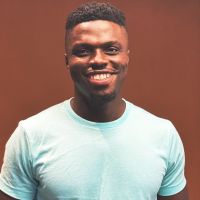
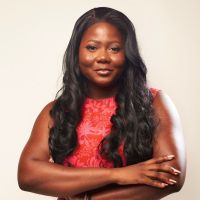
Prince Ansah and Valerie Nutakor — innovators at the intersection of climate literacy, education, and cultural expression — share how they use music, card games, poetry, and interactive activities to turn complex science into powerful community narratives.
Their work reaches across generations and geographies: from rural women composing climate-themed songs, to students learning through climate-adapted card games and activities, to policymakers experiencing community resilience through virtual reality. It’s a story about democratizing knowledge, amplifying local voices, and designing learning that meets people where they are.
[This transcript was lightly edited for clarity, web readability and faithful alignment with the audio.]
Paulyn Duman:
Welcome to the SDG Learncast with me, Paulyn Duman.
In every episode, I bring you insightful conversations around the subject of sustainable development and learning, helping us all to achieve a sustainable future.
In this episode, we travel to Ghana to explore a truly creative and culturally rich approach to climate education. Can we turn research into songs or games that are embraced by the community? We are going to hear some answers and stories from our guests, Prince Ansah and Valerie Nutakor from the Climate and Development Knowledge Network, or CDKN, and learn how they are rewriting the rulebook on how climate knowledge is reimagined and shared.
Welcome to the SDG Learncast, Prince and Valerie.
Dr. Prince Ansah:
Thank you, Paulyn. Nice to join you on this podcast.
Paulyn Duman:
Can you introduce yourselves and your work on climate education and community engagement? And perhaps share something that has sparked this journey for you.
Dr. Prince Ansah:
Thank you so much. My name is Prince, and I'm the country lead for the CDKN program. We are guided by three things. The first is to mobilize the evidence or the science at the local context for climate change. Next, we find creative ways to disseminate this evidence through different creative means. We’ve worked with different stakeholders and different mediums, using songs, games, virtual reality, and music — every aspect through which information spreads.
And the last one is that we build capacity for key stakeholders to use this information.
From that, I've designed different tools for various communities to translate research to action.
My hometown in Ghana is along the coast of Volta, in a space where sea erosion — coastal erosion — really is a hamper to most of the things that we do there.
Valerie Nutakor:
So it's one of the places in Ghana that suffers from coastal erosion. I went to visit in junior high with my dad. I realized there was so much I didn’t know about where I came from, but there was so much knowledge on social media — then it was Facebook — and in research papers. I made it a point that every time I visited home, I would document and share something about where I come from.
When I started my higher education, my first research was on the resilience of the people in that space — that’s Keta — and how the sea defense project, started by a previous government, was improving their livelihoods, and how the coastal erosion had depleted their livelihood. I looked at the storyline from both timelines, before and after the adaptation project.
Every time I spoke about the project, people would ask, “Okay, what’s the value?” Everyone knows what the value of sea defense projects is, but they don’t always know the value it has for the people who live in those environments.
For me, research that tells the stories of people is the center of learning. All knowledge is supposed to be valuable to the people within those communities. That’s the highlight for me.
I remember my professor saying that the goal of education is not so that we sit in ivory towers, but so that people can understand what we are learning in these higher institutions.
Paulyn Duman:
Two things really jumped out for me. First, you said that as a researcher you were getting information from the community, but most of the time they ask, “What have you done with the information you have gotten from me?”
Second, it’s really about research that tells the story of the people and brings that back to the community — to give back the story you have heard and the information they have provided, and turn that into a story that represents them and that they can hear again.
This is a good segue to the knowledge brokering work. Knowledge brokering can sound like a complex term. How do you define it in the local community, especially in Ghana? And how does it come alive through playground songs, storytelling, games?
Dr. Prince Ansah:
Knowledge brokering can be described like a broker — someone who stands between the one who has the money and the one who invests it. The same thing applies with knowledge brokering. It is how you take evidence — and here we emphasize evidence, which is very important — and translate it into action, collaborating with key stakeholders.
By action, we mean real implementation on the ground, where people see that the knowledge has been used practically. That is where the value is.
Research can feel extractive — you’re extracting information from them. But knowledge brokering means the evidence is processed, rationalized, and brought back to them as information they can use: something they can make decisions with, something that can inform their local policies and actions.
A major aspect of our work is democratizing knowledge. That is what we are in the business of doing. We democratize knowledge and decolonize it.
Valerie Nutakor:
And that is what we are interested in doing, because in Ghana, the context-specific nature of the knowledge that is disseminated to enable actors to take action is very important.
Paulyn Duman:
You’re extracting information, but what’s important is how this is processed and rationalized, and how they can use this to improve what they have already been doing.
One of the things that stood out for me was how you helped rural women turn climate research into traditional songs. That was so creative, and that must have been fun. Perhaps walk us through the process. What did it look like on the ground, and what impact did it have?
Valerie Nutakor:
It was definitely exciting, yet also a lot of work, because the basis of what we did was the knowledge — the science and the technical aspects.
Ghana has many ethnic groups with different languages. Even within the same ethnic group, there are sub-languages. Most scientific knowledge materials are in English, and direct translations often don’t exist.
That was a major challenge.
We curated the knowledge and did an initial scoping to find out whether our content would be viable and valuable to the people we were working with, who were largely farming communities.
We went to understand what they already knew and validated their lived experiences.
We made sure the language of education was a language they understood. If they spoke Dagaare, we used Dagaare with a translator. If they spoke Wali, we used Wali, also with a translator. We incorporated many visuals to make the content relatable. For example, discussing drought affecting crops is more meaningful than referencing unfamiliar global regions.
After the conversations, we asked them to explain their understanding. We took what they said, translated it into text, and turned the text into words for songs. Once the content was ready, we found the rhythm.
Folk songs are a major part of communication — for activism, advocacy, and fun — and women lead that. So we relied on songs because they were indigenous to the people.
Dr. Prince Ansah:
Adding to what Val said: because we are in the knowledge brokering business, we first analyze the community. What is the mode of communication? What are the power dynamics?
Power dynamics help you understand how to engage different social groups and how to shape your message.
For example, in the Upper West region, women are often not allowed to speak in public due to cultural traditions. But they are allowed to sing.
Songs are used to welcome guests, for festivals, and more — but not necessarily for advocacy. So we used that as an entry point.
We engaged the women’s groups and asked them to compose songs based on the information shared. They wrote lyrics, and we went back and forth to ensure compatibility with both science and local beliefs.
Some communities believe that climate impacts are punishment from the gods. We didn’t dismiss that; we blended it with scientific explanations to avoid pushback and to ensure the message aligned with what they believe.
We then recorded the songs and partnered with a radio station that reaches over 200 communities. The women went to the studio, explained the lyrics, and listeners called in. This gave the women confidence to speak out about issues like deforestation, especially cutting shea trees, which affects women’s livelihoods.
It created a platform they never had before.
Paulyn Duman:
I love this story. I love music, but I did not know how much work and thoughtfulness you had to implement in this project. It's important to know in which channels they can speak their minds. You had to overcome the limitations of singing in festivals and also doing it outside of the traditional spaces, but also calculate in a way that the pushback will not be too strong — to really think through how you can deliver that message and combine the message with science so that it goes through, and the collaboration with the local radios.
Why do you think, as researchers and community leaders, music, oral storytelling, and other cultural forms are such powerful tools for communicating science? And why do you think this is more effective, especially in the communities in Ghana, than facts and figures alone?
Dr. Prince Ansah:
Before writing, communication was done through different mediums — songs, folktales, stories — and communities advanced as a result of that.
Especially in our context in Ghana, culture, shared music, and storytelling are a big part of life. And I’m sure this is true in many traditional societies, especially where literacy rates are not high.
Even when literacy exists, research outputs can be complex. Every research community — whether you’re a sociologist, psychologist, or climate scientist — has their own language. Sometimes even among researchers, they don’t understand each other’s languages.
So there has to be a common ground to communicate this back to the masses or the community. That common ground is often cultural tools like music and storytelling. Those are the tools that bring all the complex translations and complex research from different disciplines to one common ground that everybody can relate to and understand.
It may not go into the detailed nitty-gritties, but at least it gives people the opportunity to understand the holistic nature of a finding that is beneficial to them.
That is why we thought that if you’re in the knowledge brokering business, it has to go beyond policy briefs. It has to go beyond written documents. It has to go beyond peer-reviewed papers. It has to go to the communities where this information matters.
Because at the end of the day, you go to the communities, pick information, analyze it, and produce findings. When you finish, it should not sit in a library or publication database. That information needs to go back to them so they can make decisions that inform their day-to-day activities — whether farming, managing water, or waste.
The best way to do that is through creative means like poetry. We’ve used poetry to do that. Through film in local languages. We've engaged filmmakers to address specific community issues. We do a lot of co-creation labs.
In co-creation labs, we share research findings and bring in creatives from the community — poets, theatre directors, musicians, artists, painters — who can tell the story in different forms. We bring them to work with researchers and the community on key findings they want to share. For a week, they work together.
Those who believe painting will speak better create art pieces. Those who work in cinematography develop mini-series where they act out stories to highlight specific issues. Those who write songs create lyrics. Those who work with poetry create poems.
These have been some of the amazing things we’ve done. Research information touches the mind, but art touches the heart. When I speak to you formally, it touches the mind. But when I narrate it in poetry, it touches the heart — and that is where real impact is.
Valerie Nutakor:
In Ghana specifically, our music and art forms, our modes of transmitting information, have mostly been oral literature and folk music. Across the regions, we have songs tied to specific cultures and storylines. So leveraging that is very important. It touches the heart and connects to our institutional memory.
We have ethnomusicology that studies our folk music and literature. So for us, science and culture are not mutually exclusive — they are intertwined.
Paulyn Duman:
Localized, contextualized, truly tailored to the community — that is a real lesson I’m getting from you.
Prince, can I go back to what you said about virtual reality? You’ve experimented with this in schools and rural communities. I’m curious to hear what the process was like and what surprised you.
Dr. Prince Ansah:
I would say it was initially a very experimental stage. One thing we realized is that modern technology has its disadvantages, but it is also a very good platform for connecting people and experiences.
I’ll give you how we’ve used this in the local context. Usually, when you go to policymakers and have conversations with them, even if you show them a 2D video of the community, when they experience it in a different format, it changes everything.
Short videos of communities impacted by climate change, or showing their resilience, have actually — through virtual reality, through a 360-degree video — changed the way key stakeholders perceive issues. It brings them into the presence of the situation.
There are so many communities across Africa doing amazing climate resilience work and experiencing impacts. However, these communities may never have the opportunity to visit each other to learn or experience how others are adapting.
So we thought: let’s use virtual reality to share those experiences. These are local women’s groups and farmers who will never get the opportunity to take a flight or even pick a car to another region.
Through virtual reality, we can share the same experiences.
I remember one of the expressions was: “I didn’t know this was happening in this community. And look at what they are doing. I think we can also do the same.” The experience was transformative.
We realized VR creates a good platform for peer learning. And it saves costs because you don’t need to transport whole groups from one community to another.
Most people associate virtual reality with showcasing problems — droughts, rising sea levels, and other issues.
Paulyn Duman:
But how can virtual reality go beyond that and help communities imagine solutions, inspire policymakers to act, and imagine a positive future they can contribute to?
Valerie Nutakor:
For us, we are intentional about the type of storytelling we do — including VR storytelling. When people engage with virtual reality, we want them to see something relatable to their lived experience. And that video must also show what people are doing to get out of the situation they’re in.
For instance, with the women in the Upper West Region, we found a video from Kenya where they were experiencing desertification and drought. As part of their work, they were using climate-smart, sustainable agricultural practices to adapt.
So not only do we show them the problems — we show them the solutions.
That is what we do with visual storytelling: enable people to want to do something. As part of our work, we do a lot of capacity building. There are many innovations happening. We are always seen as a continent with problems, but we want to tell stories about innovation and solutions that can inspire others.
Dr. Prince Ansah:
We are also exploring how young people can follow the COP process through virtual reality, because there are groups trying to do VR viewing. We also train negotiators to go to COP. Often, they lack funding to attend.
So we are exploring whether young people can come to our office and experience the COP process in VR — to turn around and see people’s faces and feel like they are part of the negotiations.
Paulyn Duman:
There are a lot of other things you are doing that fascinate me, including turning climate literacy into games — card games, street games. You are also working across radio, television, and podcasts. So there are different formats you’re working on.
I want to understand: how do you choose which is the best format for a community? Which medium fits which audience, and what kind of message? And perhaps, could you also share an example of street games or card games that children or young people can use to learn about climate?
Dr. Prince Ansah:
We first want to understand what audience we want to speak to. For example, if we work in a community or with a research team and they say, “We are doing something focused on resilience,” then we have to understand which communities along the coast they are working with.
Then we understand: Who are the target audience? What is the number one medium through which communities receive information? Which radio stations or local actions?
In schools, games are one of the things children relate to. They sit during their break and play different types of games. So we ask: What games do the students enjoy? Once we understand that, we take the same game and bring it to our research lab team or collaborative lab team and say, “This is the process of how this game is played. How can this game be translated in a way that will still teach the children about coastal resilience?”
We take the evidence — fact by fact — summarize it simply, and then attach each strategy in the game with a climate term or a climate action. We try to modify some of the games to explain basics.
There’s a Red Cross game called Farmer Juggle. You throw a ball around, then you add more balls, and it becomes overwhelming. We use Farmer Juggle to explain how multiple stresses exacerbate climate impacts. The balls start flying over; they’re unable to catch them. And when you finish, you can explain that this is how climate impacts worsen: existing issues become harder to manage.
So what are the best choices to focus on to tackle? That gives a good opportunity to explain climate issues in general.
We try to understand the context and then design things that fit that context — things people enjoy engaging with but still learn from.
Valerie Nutakor:
I’m sure listeners are interested and excited to get examples they can use in their own context, because games can be applied in different communities. If they played these games, it would be nice to see how they can also use them in their work.
One of the things I find fascinating but also challenging is that creative education — I feel what you're doing now is really creative education — often struggles for recognition.
Paulyn Duman:
My question is: what challenges have you faced in scaling your work or gaining support from formal institutions or funders? And perhaps this could be a space for you to mention in what way they can help you address those challenges.
Valerie Nutakor:
It has really been challenging. We are unable to spread it as much as we would love to, because we’ve had requests from people asking, “Can you print some of these cards for us? Can you print some of the games for us? Can you modify this for us so we can also adopt it?”
Because of that, we had a sort of toolkit for training institutions, like teachers within institutions who could adopt some of the games to incorporate them into their education. But we don’t have access to financing for some of these toolkits to be produced, and for trainings to be organized. So they sit with us unless people come in with an existing budget — which is rare in the development space.
Another challenge is acceptance of the innovation. Most people don’t really understand it until they experience it. So we had to do a lot of visibility work.
People often assume the games are for children. When we mention the games, we have to explain that they cut across different ages. For example, the climate card games we produced can be used by children and adults.
Because of this, we have to invest money into organizing experiential sessions for people to come and try our games and adopt them from there.
Dr. Prince Ansah:
We have a collaborative partnership with the Ghana Library Authority. As part of our climate education project with them, we are developing a climate portal. The portal includes videos and lessons on climate change. But we also wanted a more creative section where people could experience some of the lessons in a more visual way — beyond 2D videos.
Because of lack of funding, this is currently sitting idle. We also get pushback from schools because they don’t understand the value until they experience it. This is outside the traditional way of education.
In Ghana, where you have about 46 local languages, it becomes difficult to do a lot of contextualized climate innovations, especially those involving audiovisuals. Translating a song in one language doesn’t work in another — it becomes a whole new process from scratch. Every community has its own strategy.
Overall, you pilot, and hopefully there’s potential for others to upscale these innovations.
Paulyn Duman:
We are relying on evidence and researchers. There is also a lot of restraint from researchers because academic environments are usually very closed, and not open to new forms of sharing besides peer review.
Trying to convince researchers of the value of using different mediums to share — even as a base for readers to look more into their papers — is difficult. Because peer review is tied to promotion, not creative sharing.
Dr. Prince Ansah:
That is part of the challenge. Researchers think within the structured academic production model.
But it is important for researchers to understand that research is not finished until it is shared. If you have to share it, then you are also in the communication business. And you have to be flexible and open to accepting all forms of communication to get the message to the people where they are.
It’s complex. But compromise is important.
Paulyn Duman:
There is so much to learn from you. There are many educators, climate advocates, and community leaders listening to this podcast, and I’m sure they are hoping to create similar local learning experiences — hoping to be as creative as you are.
You have been fantastic in sharing your creativity and your process. Looking back at everything you have learned, across different communities, what key lessons would you share with other educators, advocates, and leaders?
Valerie Nutakor:
It’s very important to listen to the people. At the core of the work we do, it is people-centered. Once people are heard and valued for where they come from and what they are doing, then you can tailor solutions that matter to them.
It’s a lot of work, because being intentional takes effort.
And for knowledge brokers, you have to know the work yourself. You have to know the science and the content. Once you speak out of knowledge, people are ready to listen because you are talking with expertise.
Dr. Prince Ansah:
Everything has a story — you just have to know how to tell it. That is what we’ve learned from this work.
The format and channels of communication are changing. A few years ago, social media wasn’t what it is today. AI is now everywhere. We have to keep asking: in the next five years, how will people receive information?
The last thing I’ll say is collaboration. Don’t be afraid to collaborate with others. It’s not a standalone thing. That’s why we do co-creation labs — because they bring community members, policymakers, creatives, content creators, and researchers together.
Co-creation labs have shown to be one of the most powerful ways to create strategic knowledge brokering tools that engage audiences in ways you never imagined — not just through the channel itself but through the content, language, and approach.
Paulyn Duman:
I heard many thoughtful and insightful lessons from you, and I’ll try to summarize them:
Listen to the people. Know your science. There is a story in everything — learn how to tell that story. Embrace the changing formats and channels. Strategize and collaborate for the future.
Prince and Valerie, thank you so much for your time.
To all our listeners, I hope you found this as exciting, fascinating, and creative as I did. See you next time on the SDG Learncast.
--
Paulyn Duman is the Knowledge Management, Communications, and Reporting Officer at the United Nations System Staff College (UNSSC) Knowledge Centre for Sustainable Development and is a coordinator for the Joint Secretariat of UN SDG:Learn, together with UNITAR.
The opinions expressed in the SDG Learncast podcasts are solely those of the authors. They do not reflect the opinions or views of UN SDG:Learn, its Joint Secretariat, and partners.