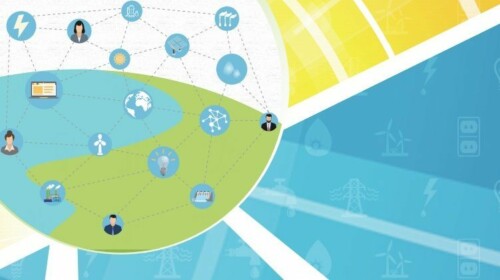
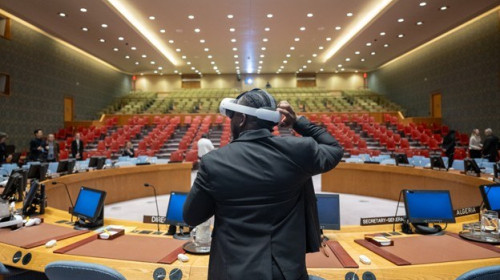
The AI Essentials for Decision Makers course offers a comprehensive and accessible introduction to artificial intelligence and its transformative impact on governance, policy, and professional practice. Designed for diplomats, civil servants, and professionals across sectors, this fully online and self-paced programme provides the knowledge and tools needed to navigate the opportunities and challenges of digital transformation. Through five engaging modules, participants explore the fundamentals of generative AI, data-driven policymaking, and the use of AI in strategic foresight, gaining practical insights to make informed, ethical, and future-ready decisions in their institutions.
The course includes 5 modules:
Module 1: “Understanding Digital Transformation: Opportunities and Challenges”
Module 2: “Fundamentals and Overview of Generative AI”
Module 3: “Understanding AI Systems”
Module 4: “Intelligence for Effective Policy-Making”
Module 5: “AI in Foresight”
Target Audience
This course is designed for diplomats, policymakers, UN and international organization staff, public sector officials, and professionals engaged in governance, innovation, and digital transformation. It also welcomes private sector experts, analysts, and early-career professionals seeking to understand how AI can enhance institutional effectiveness, policy design, and strategic decision-making in a rapidly evolving technological landscape.
Learning Objectives
At the end of the course, participants should be able to:
- Understand the key concepts, opportunities, and challenges of digital transformation and artificial intelligence.
- Identify the main types, functions, and applications of AI systems, including generative AI and AI agents.
- Assess the role of data, algorithms, and evidence in effective and ethical policy-making.
- Apply AI-based insights and foresight tools to support strategic decision-making and institutional innovation.
- Recognize the ethical, governance, and human dimensions of AI integration in professional contexts.

Related
Can Education Wait? A Deep Dive into Learning in Crisis Zones
Microlearning
 Podcast
Offered by:
Yasmine Sherif, Executive Director (Education Cannot Wait)

The Tampere Convention and Telecommunications Deployments when Disasters Strike
Course
Self-paced e-learning
Offered by:
ITU

Data revolution and new technologies for the most vulnerable groups
Microlearning
Podcast
Offered by:
Dr. Emmanuel Letouzé, Director (Data-Pop Alliance)