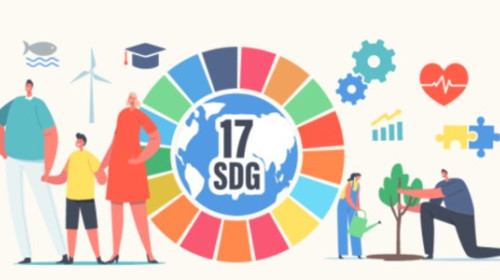
In 2015, the world came together to adopt an ambitious plan for global development: the United Nations 2030 Agenda and its 17 Sustainable Development Goals (SDGs). Subsequent global shocks and setbacks, however, have increasingly underscored our shared vulnerabilities and hindered our progress towards a peaceful, prosperous, equitable and sustainable future. International cooperation and collective action are needed more than ever; yet our existing systems of multilateral engagement weren’t designed for the complex, interconnected, and rapidly-changing world in which we live.
It’s time for the United Nations to turbocharge.
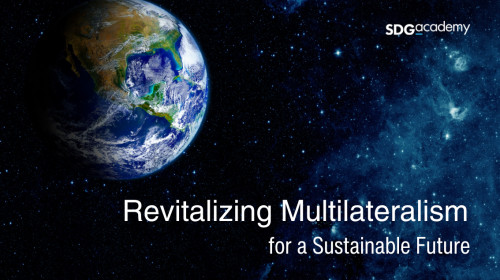
The 2024 Summit of the Future marked a “once-in-a-generation opportunity” to reframe global governance for the future. This course, Revitalizing Multilateralism for a Sustainable Future, was designed to help you understand it and its follow-up conferences.
In November 2025, the global community will come together for the Second World Summit for Social Development (WSSD2) in Doha, Qatar, to recommit to the goals of eradicating poverty, reducing inequality, and promoting social integration.
In this unique "living" course, Prof. Patrick Paul Walsh guides learners through the past, present, and future of the global development agenda, examining the goals and outcomes of the Summit of the Future and the lead-up to the Second World Social Summit with the aid of renowned leaders in the field of sustainable development. Through recorded videos from the prestigious Global Classroom lecture series and other high-profile fora, learners will hear from experts in global governance, finance, digital transformation, and more, and consider the global development agenda in light of their insights.
This course was launched to prepare learners for the Summit of the Future in September 2024. Since then, we have continually added new content to reflect on the Summit's outcomes. Materials for "Part 2: Advancing Social Progress" were added in October 2025 to address the Second World Summit for Social Development.Target Audience
- Policy professionals who want to understand the goals of multilateral fora
- Development practitioners seeking knowledge on frameworks for global governance
- Advanced undergraduates and graduate students interested in international relations, development, and other key concepts related to multilateralism
- Private-sector actors, such as those who work in real estate development, technology, telecommunications, transportation, or energy – whose work can improve society
Learning Objectives
- Take stock of where we are at the mid-point of the SDGs and what more needs to be done before 2030.
- Explore the UN's goals for the future of multilateralism.
- Understand the multilateral process for adopting global agreements.
- Explore the new challenges and opportunities for multilateralism in the 21st century.
- Consider how you can contribute to reimagining and revitalizing global cooperation in your spheres of influence.
Offered by
Related


Preparing for Action “National Briefing Package: The 2030 Agenda and SDGs”
Resource
Interactive learning package
Offered by:
UNITAR