
The introductory course aims to raise awareness and build capacities for adopting and implementing an integrated approach to tackling poverty and environment issues and achieving the sustainable development goals. The course will explain the rationale, drivers, challenges, and opportunities in integrating environment, climate, and poverty issues, while laying the foundations for a more advanced course focusing on policy analysis, integrated planning, designing interventions, financing, communications, and monitoring and evaluation of poverty and environment issues. By strengthening capacities for an integrated approach to sustainable development, the introductory course aims to accelerate the delivery of the 2030 Agenda and the Sustainable Development Goals.
The course is self-paced and takes a total of 1,5 - 2 hours to complete. Each module of the course features a module quiz. The wrap up module features a final quiz and an interactive problem-solving scenario. A certificate of completion is awarded to learners who complete:
• All videos, interactive lessons, and activities;
• Final quiz with a 70% or higher score;
Target Audience
The integration of poverty and environment issues in the policy process requires the engagement and intervention of multiple stakeholders. The target audience for the introductory course includes:
• Technical and policy planning staff at the national, regional, and local levels;
• Development practitioners;
• Change agents from civil society and the private sector, including youth;
• Citizens interested in sustainable development in practice.
The course is especially geared towards learners from developing countries, particularly in Asia and sub-Saharan Africa, which house the largest populations of the global poor, are most vulnerable to impacts of climate change, and are simultaneously facing unprecedented degradation of their natural capital in their current path to development
Learning Objectives
The focus of the introductory course is on providing learners with an overview of the interlinked poverty and environment issues and building a strong conceptual foundation of the core theories based on practical examples and case studies from the PEA project.
After completing the introductory course, learners will be able to:
- Discuss the poverty and environment nexus and related concepts.
- Identify related international developments, as well as global and regional trends.
- Explain the rationale and drivers behind integrating policy planning.
- Identify challenges and opportunities for advancing an integrated approach.
- Give examples of enabling policy conditions for integrating poverty and environment issues.
Related

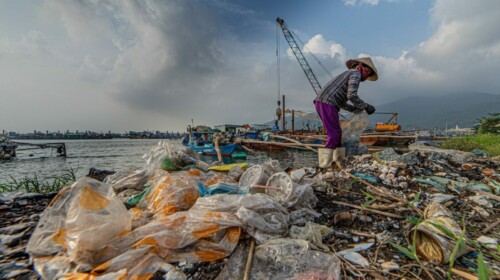
Cities and Marine Plastic Pollution: Building a Circular Economy
Course
Self-paced e-learning
Offered by:
ESCAP


Keeping the Taps Running in a Changing Climate
Course
Self-paced e-learning
Offered by:
NAP-GSP, UN CC:Learn