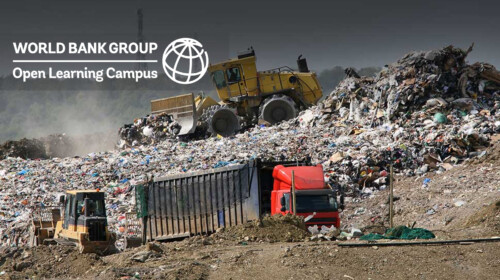
Natural resources represent a potentially transformational opportunity to support development, but they are ultimately finite. How do we make the most of them without destroying the planet? In this 12-week massive open online course (MOOC), produced by the Natural Resource Governance Institute, the Columbia Center on Sustainable Investment, and the World Bank, you will learn about efforts to sustainably manage extractive industry investments. You will come to understand the complex and interwoven aspects of natural resource governance and become part of a global movement of citizens and practitioners committed to harnessing the transformational impacts of our natural resources.
Transcripts available in: اللغة العربية, English, Español, Français, Русский
Download SyllabusTarget Audience
Sustainable development practitioners – as well as private-sector actors, such as those who work in corporate sustainability and responsibility or renewable energy – who need to understand the historical context and evolution of the extractives industry
Extractive practitioners, such as those who work in oil, gas, and mining, who are interested in making the field more sustainable
Graduate students and advanced undergraduate students studying extractives, environmental science, environmental law, sustainable development, sustainable business, and related fields
Climate change activists or practitioners looking to understand the balance of sustainable resource use and business investment
Learning Objectives
To understand how wealth generated from natural resource development can be used to further sustainability, extractive industry governance and policy, and the relationship between the government, extractive industries, and citizens.
Offered by
Related

How the BuildSkills Academy is constructing a sustainable future
Microlearning
 Blog
Blog
Offered by:
Ms. Isabela Carrozza Joia (Program Associate, SDG Academy, UNSDSN)

Lifecycle, principles and good-practices on national cybersecurity strategy
Course
Self-paced e-learning
Offered by:
ITU