
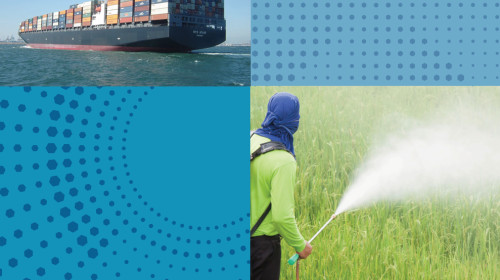
The dramatic growth in chemical production and trade during the past decades has raised concerns about the potential risks posed by hazardous chemicals and pesticides. Countries lacking adequate infrastructure to monitor the import and use of these chemicals are particularly vulnerable. In response to these concerns, the Rotterdam Convention on the Prior Informed Consent Procedure for Certain Hazardous Chemicals and Pesticides in International Trade was adopted in 1998 and entered into force in 2004. It aims to promote shared responsibility and cooperative efforts among Parties in the international trade of certain hazardous chemicals in order to protect human health and the environment from potential harm
and to contribute to their environmentally sound use. This course provides an in-depth learning experience, systematically covering the mechanisms and provisions of the Convention. It explores in detail key concepts and processes - for example, step by step completion of an import response form – and covers topics such as Annex II criteria, provisions on custom codes and labelling, among others.
The course is self-paced and adapted to the schedule of full-time working professionals and is suitable for participants irrespective of their level of pre-existing knowledge on the Rotterdam Convention. The four modules of the course are self standing and can be completed in any order. For those with no or very limited background knowledge, it is recommended to complete each module in the given order. More experienced users may wish to choose specific modules individually to deepen their knowledge on a particular topic in a targeted manner. The DNAs that are relatively new to the position are encouraged to complete the entire course in the suggested order.
The course is structured in four modules, each module including two to three lessons:
- Module 1: What is the Rotterdam Convention and why was it created?
- Module 2: How are chemicals listed under the Convention?
- Module 3: How does the trade of chemicals listed in Annex III to the Convention work?
- Module 4: Which mechanisms exist for the exchange of information under the Convention?
The successful completion of the course rewards the learner with a certificate. To complete the course, the learner must complete all four modules and pass each associated quiz with a minimum grade of 70% from no more than three attempts. The completion of each module also rewards the learner with a badge.
Download SyllabusTarget Audience
This self-paced online course on the Rotterdam Convention primarily targets the Rotterdam Convention designated national authorities (DNAs) and Official Contact Points (OCPs). It also offers valuable knowledge for other governmental and non-governmental actors with a role in the implementation of the Convention, from custom authorities to chemical importers.
The course also offers valuable knowledge and insights for the following audiences:
- Private sector entities with a role in the import and/or export of chemicals;
- Civil society organizations with an interest in the functioning of the Rotterdam Convention; and
- Individuals with an interest in the international trade of chemicals.
Learning Objectives
After completing the course, you will be able to:
- Explain the functioning, actors, key provisions and mechanisms of the Rotterdam Convention;
- Identify relevant tools and resources for the implementation of the Convention at the national level;
- Use relevant tools and resources for the implementation of the Convention at the national level; and
- Support effectively and efficiently the implementation of the Convention at the national level.
Related

The Fight for Our Forests and Future
Microlearning
 Podcast
Offered by:
Tyson Miller, Director (Earth Insight)