In this episode, we dive into one of Europe’s most inspiring urban renewal stories: the transformation of Germany’s Emscher River. Once an open sewer running through the industrial heartland of the Ruhr, it’s now a thriving, green artery for wildlife and communities.
Over 30 years and €5.5 billion, the Emschergenossenschaft and Lippeverband replaced 430 km of open wastewater channels with modern underground systems, restored 170 km of river, and created public spaces like the stunning Phoenix Lake.
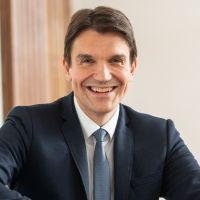
We’ll talk with Prof. Dr. Uli Paetzel, CEO of Emschergenossenschaft, about how a river went from symbol of industrial pollution to a model of ecological restoration and community pride. This is a story of engineering brilliance, political will, and deep community engagement, a blueprint for how cities can heal their waterways and themselves.
[What follows is a transcription of the podcast, modified for enhanced web readability.]
Paulyn Duman: Welcome to the SDG Learncast with me, Paulyn Duman. In every episode, I bring you insightful conversations on sustainable development and learning, helping us all move toward a sustainable future.
In this episode, we dive into one of Europe's most inspiring urban renewal stories: the transformation of Germany's Emscher River.
Once an open sewer running through the industrial heartland of the Ruhr region, it is now a thriving green artery for wildlife and communities.
I’m really excited to introduce you to our guest, Professor Dr. Uli Paetzel, CEO of Emschergenossenschaft, to talk about how a river went from being a symbol of industrial pollution to becoming a model of ecological restoration and community pride.
Welcome to the SDG Learncast, Professor Paetzel. Can you start by telling us about yourself and your work as CEO of the Emschergenossenschaft?
Prof. Uli Paetzel: I’ve been working at the Emschergenossenschaft for nearly 10 years. Before that, I spent 12 years as mayor of my hometown in the middle of the Ruhr region, a small city of about 65,000 people called Herten.
As CEO of the Emschergenossenschaft, it’s very important for me to work together with all the cities in our region and with all stakeholders—also keeping in mind sustainability, climate change adaptation, the political parties, and everyone who is truly willing to change our region for the better.
Paulyn Duman: I’ve seen some of the pictures and news coverage from the past. It really looked like a sewer, and it’s such a huge river that was basically dead. Can you tell us the story of how Germany started tackling these urgent problems and laid the groundwork for the comeback we see today?
Prof. Uli Paetzel: It all began during the era of industrialization in the 1840s and 1850s. The steel and mining companies grew bigger and bigger. People came from Poland, from Silesia, from East Prussia to our region. A lot of workers and their families came here to spend their lives.
Because of the very intense mining activity, there was subsidence of soil across more than 842 square kilometers. That meant we had to pump a lot, we had to figure out what to do with the wastewater, and how to clean it.
This was a huge question in the 19th century, and for decades responsible stakeholders couldn’t find an answer. After long discussions, the Emschergenossenschaft was founded. The idea was simple: to use the whole Emscher river system, more than 350 kilometers, and turn it into open sewers so that both human and industrial wastewater could flow to the North Sea.
After some years of building these sewers, the first wastewater treatment plants were established. Cleaning technologies developed and became more widespread. This system worked until the 1980s.
Then, mining activity in our region stopped. A new awareness for green and blue spaces grew. Climate activities, especially from NGOs, became more important. And by the end of the 1980s, the decision was made: we will renaturalize the Emscher River.
More than 430 kilometers of new sewers were built, four huge wastewater treatment plants, and many pumping stations. It was a complete change of our region, from gray to green.
And the success came very quickly. Nature took back control. For example, just three years after restoring the river, we already had more than 900 species living in and around it, and more than 30 different kinds of fish. That was quite astonishing to see.
Paulyn Duman: That is very impressive, I have to say. What also strikes me is that this transformation is not just about technical solutions, engineering, or technology. It also created places like Phoenix Lake, where people and nature thrive side by side.
Can you share one of these examples or locations that really highlights the project’s impact?
Prof. Uli Paetzel: You can build wastewater treatment on a high technical level. You can renaturalize a river. But from my point of view, it’s absolutely necessary to see these measures as more than water or wastewater techniques. They have to be part of social-ecological change, and you have to understand their political importance.
If you renaturalize a river but don’t build a bicycle path along it, it won’t work. People need to discover the new river. They need to feel part of the success story.
For example, on an old steel mill site in Dortmund, a new river and a new lake were created, Lake Phoenix. This lake is not only a place where new enterprises opened, new jobs were created, and new housing was built. It also protects this part of the city from stormwater and heavy rain.
So you can combine the transformation of the urban landscape with the transformation of the water system. Bringing those two things together, the social, the ecological, and the economic, really makes for success.
Paulyn Duman: It’s so important that you highlight it’s not just about technology and engineering, but also about bringing people together. And that’s why you created bike paths so that people can experience the river.
Can you share how you were able to engage communities: how you wove that social fabric into the plan, and give examples where local voices really reshaped the project, perhaps even surprising or inspiring you?
Prof. Uli Paetzel: From my point of view, it’s very important to make people part of the story. You only succeed if they feel this is their project too. So every time there was a renaturalization of a river, or when there was traffic disruption or other impacts, we communicated a lot with the people living nearby.
We invited them to take a closer look at what was happening. We always tried to give them the possibility to make small changes to the project if it was really affecting their interests.
We also do a lot in urban health, so people can enjoy good cycling experiences. And we make sure young people learn how a river works. We really try to invest in the social side of the story.
Paulyn Duman: With big projects like this, there are often big disagreements. Can you tell us about a moment when mediation or open dialogue turned conflict into collaboration?
Prof. Uli Paetzel: Fortunately, we didn’t face major problems. Everyone was keen on being part of the success story. Sometimes a homeowner would say: “Okay, there will be dust here for three years.” Then we talked with them about how we could help. Most of the time it was okay, sometimes they felt we didn’t help enough. That’s quite normal. But there was never a legal clash about the project, which is unusual in Germany.
Paulyn Duman: Let me go back to something you mentioned, mining made it impossible to build underground sewers for decades. What finally made it possible? Was there a single turning point in history?
Prof. Uli Paetzel: The end of the mining industry in Germany in the 1980s. It became clear that the industry would close within 10 to 20 years. Mining had moved further north, away from the Emscher region. So there was no more soil subsidence here. That simple fact made it possible to build a completely new sewer system.
Paulyn Duman: Of course, Germany is also part of the EU, and you’re aligning with EU policies like the Water Framework Directive. In fact, you’re one of the experts on water governance. How did these frameworks influence your work, and what’s a takeaway for other cities aiming for sustainability?
Prof. Uli Paetzel: EU legislation helped us a lot. Without the Water Framework Directive, we would never have renaturalized the river in this way. Once it was established at the European level, it was clear: we follow the directive, and we will do it.
It’s amazing to see how political decisions in Brussels can inspire innovation and help change a whole region. Without the European legislation, it wouldn’t have happened.
Paulyn Duman: Another aspect I like about this project is your programmes such as Adopt a Stream and school partnerships. These are so important because they build a sense of stewardship. I recently read in The Guardian that there has been a 60% decline in human-nature connection since the 1800s. Projects like yours reconnect children with nature.
Can you tell us about Adopt a Stream and your school partnerships?
Prof. Uli Paetzel: After renaturalizing the river, we created “blue classrooms” where pupils can come to the river, observe who is living there, discover insects or little fish. We cooperate with many schools and provide materials and advice on how to teach children about life in and around the river.
We really try to make children the owners of the river. Once they feel “this is my river,” they won’t destroy it. These little things don’t cost much, but they are so important to engage people with their river.
Paulyn Duman: Have you seen the impact of this work on the children as they grew up?
Prof. Uli Paetzel: Yes—the first two from these programmes have now applied for jobs with us. It really works. Also, we see almost no damage or waste in the river. In many countries, rivers are still full of trash. Here, people see it differently: “That’s our river, our Emscher, and I won’t put waste in it.”
Paulyn Duman: For our listeners, what is one practical strategy that other cities, mayors, or governors facing similar challenges can take away from your experience?
Prof. Uli Paetzel: Start to think with water as part of urban and city transformation. Think about how cities can become sponge cities.
We face drought on the one hand, and extreme rains and floods on the other because of climate change, no doubt about it. So we have to change our cities to act like sponges: when it rains, the rain is absorbed and stays in the city. It can nourish trees, or be directed into the river. In the past, rainwater went into the sewers and to treatment plants, but rain doesn’t need treatment.
This change will improve people’s lives. And if you do it as a mayor, you’ll be the hero of your town, because everyone can see the difference.
Paulyn Duman: You’ve shared such hopeful stories for mayors. But many of our listeners are young people. In places where there’s no political will, what can youth do in big endeavors like cleaning up a river?
Prof. Uli Paetzel: There are so many possibilities. Cleaning up a river is possible everywhere. You can green your roof or your wall. You can take concrete away from your property and let the water in. You can work with other young people to build pressure and change the political will of your city. Just try.
Paulyn Duman: Professor Paetzel, thank you so much for your time. This has been truly inspiring. For our listeners who want more information about the Emscher transformation, where can they go?
Prof. Uli Paetzel: You can find more information on our website, www.eglv.de, or you can email us, or even do an internship at our company. Everyone is welcome to learn more about our great Emscher conversion.
Paulyn Duman: Thank you so much.
Prof. Uli Paetzel: Thank you. All the best.
--
Paulyn Duman is the Knowledge Management, Communications, and Reporting Officer at the United Nations System Staff College (UNSSC) Knowledge Centre for Sustainable Development and is a coordinator for the Joint Secretariat of UN SDG:Learn, together with UNITAR.
The opinions expressed in the SDG Learncast podcasts are solely those of the authors. They do not reflect the opinions or views of UN SDG:Learn, its Joint Secretariat, and partners.
Related
Nelson Mandela: Life, Legacy, and Leadership - Online Self-Paced Module
Course
Self-paced e-learning
Offered by:
UNSSC
Banking on Biodiversity: The Seed Savers’ Crusade
Microlearning
 Podcast
Offered by:
Dr. Stefan Schmitz (Executive Director of the Crop Trust),
Empowering SDG progress: A Glimpse into the Kyrgyz Republic's SDG Monitoring
Microlearning
Blog
Offered by:
Nazira Kerimalieva (First Deputy Chairman, National Statistical Committee (NSC) of the Kyrgyz Republic)
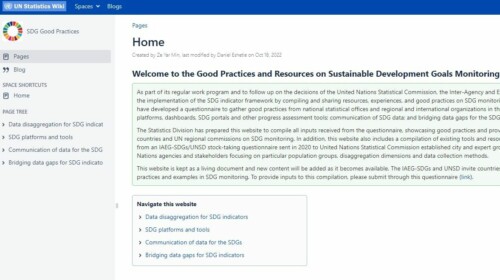
Good Practices and Resources on Sustainable Development Goals Monitoring
Resource
Training material
Offered by:
UNSD